
Explore our high-performance hydrodynamic automatic flood barriers and surface-mounted gate systems designed for global infrastructure and commercial assets.
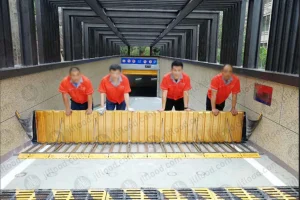
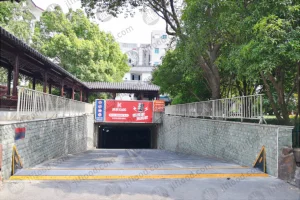
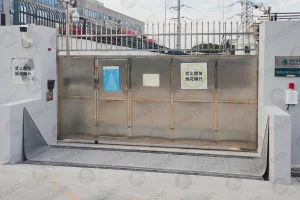
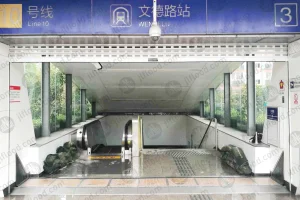
As global climate volatility escalates, municipal authorities, commercial real estate developers, and utility operators face unprecedented flash flooding events, severe typhoons, and storm surges. Conventional manual flood mitigation measures are rapidly becoming obsolete due to human error, delayed deployment times, and power grid failures during severe weather.
In urban engineering projects worldwide, the transition toward passive, power-free, hydrodynamic automatic flood protection systems represents a critical evolution in structural flood resilience. Modern smart cities require perimeter protection devices that operate with 100% mechanical certainty — rising automatically when floodwaters approach, without requiring human presence, manual assembly, or electrical energy grid connections.
Nanjing Junli Technology Co., Ltd. leads this global market shift by engineering heavy-duty automatic flood gates, substation flood protection doors, metro connection channel barriers, and garage driveway barriers. Combining precise hydraulic buoyancy design with China’s Industry 4.0 advanced manufacturing ecosystem, Junli delivers scalable ODM/OEM solutions to contractors, municipal procurement officers, and engineering specifiers across over 30 countries.
The fundamental weakness of electrical flood barriers is their reliance on power grids, water level sensors, and mechanical motors, all of which are vulnerable to short circuits, power outages, and electronic component failure during extreme precipitation events.
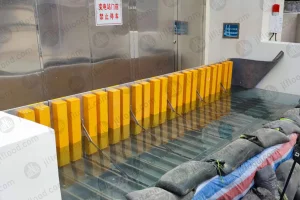
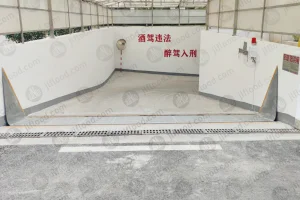
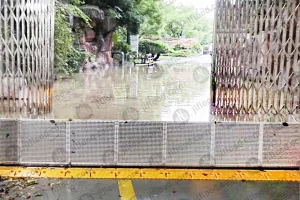
Our hydrodynamic barriers sit completely flush with the floor during normal conditions, allowing heavy vehicle traffic to pass without interference. When surface runoff enters the recessed bottom frame chamber, the water's natural hydrostatic pressure and buoyancy lift the panel automatically to erect a vertical retaining wall.
Each barrier panel utilizes marine-grade EPDM weather seals integrated along the side frame columns and bottom hinges. As hydrostatic head pressure increases, the water pressure forces the elastomeric seal tighter against the frame, creating a certified IP68 water-tight seal against high water columns.
Engineered from T6 6063 aerospace-grade aluminum extrusion profiles and 304/316 stainless steel axles, Junli flood protection barriers resist dynamic debris impact, saltwater corrosion, and severe structural bending under continuous water head pressures up to 2.0 meters.
For international EPC contractors, municipal authorities, and wholesale importers, procurement efficiency depends on structural reliability, precision fabrication, short lead times, and competitive direct-from-factory pricing.
Our 15,000+ sqm manufacturing facility in Nanjing features multi-axis fiber laser cutting tables and continuous robotic MIG/TIG welding stations, ensuring precise frame tolerances (±0.5mm) critical for dynamic seal seating and zero-leakage field performance.
Every batch of custom-engineered embedded and surface-type flood barriers undergoes rigorous 100% full-scale water retention testing in our factory testing pool. We measure lifting initiation times, deflection dynamics under load, and seal leakage limits prior to export packing.
By standardizing core hinge mechanisms, side channel seals, and modular float modules, Junli provides flexible OEM and ODM configurations. We can scale single span barriers up to 6 meters wide or create multi-segment linked systems spanning over 30 meters for wide vehicle driveways.
We provide complete technical tender packages including CAD civil embedding drawings, structural loading calculations, BIM models, installation guides, and international seaworthy steel-framed crate packaging to prevent shipping damage.
Different commercial and civil infrastructure openings present unique hydraulic heads, load requirements, and site spatial constraints. Junli custom-engineers flood protection devices for specialized environments.
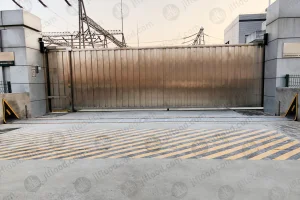
Electrical transformers and high-voltage gear rooms require uninterrupted perimeter flood defence. A flood inside a power grid hub can result in tens of millions of dollars in equipment destruction and regional blackouts.
Solution: Rapid-rising self-closing barriers and automatic substation gate gates designed for zero electrical reliance. These prevent flash water ingress while maintaining easy vehicle access for maintenance crews during clear weather.
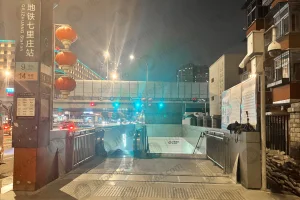
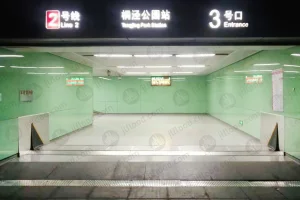
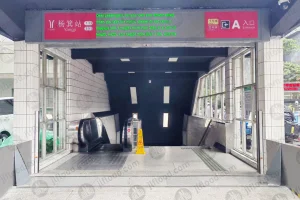
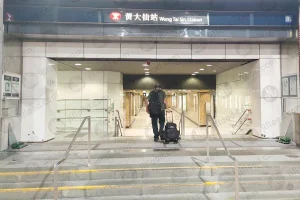
Subway station entrances, ventilation shafts, and subterranean connection channels act as natural drainage funnels during urban cloudbursts, posing severe life safety risks to commuters.
Solution: Heavy-duty embedded automatic flood gates installed flush at metro entrance portals. Validated in high-density transit networks including Guangzhou Metro, Suzhou Metro, and Beijing Metro systems.
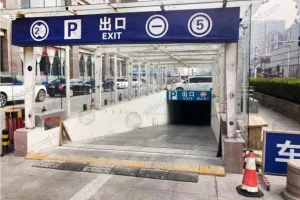
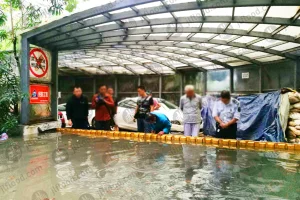
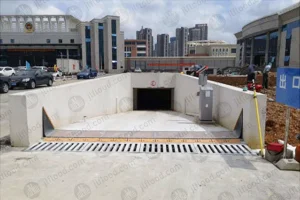
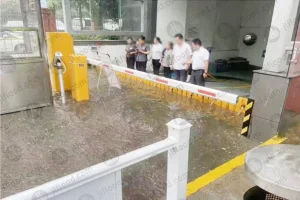
Underground parking structures at shopping centers, office towers, and residential complexes are primary collection points for urban storm runoff.
Solution: Flip-up and hydrodynamic recessed garage ramp barriers capable of sustaining continuous vehicular traffic loads up to 60 tons (DIN EN 124 F900 standard) without panel deformation or seal displacement.
Hospitals, emergency response hubs, and underground street crossings require certified flood barriers that comply with national civil defense and emergency safety protocols.
Solution: Modular hydrodynamic barrier arrays equipped with manual override mechanisms, visual water level alarms, and high-visibility safety graphics for seamless integration into public safety systems.
Engineers and procurement specialists evaluate flood defence options based on total cost of ownership, deployment reliability, life safety risks, and maintenance requirements.
| Performance Benchmark | Junli Hydrodynamic Barrier | Manual Demountable Aluminum Boards | Motorized / Electric Flood Gates |
|---|---|---|---|
| Deployment Speed | Instant Automatic (< 0.1s) | Slow (15 to 45 mins manual labor) | Moderate (30 to 90 seconds electric motor) |
| Electricity Reliance | 0% (Pure Water Buoyancy) | 0% (Manual Labor Required) | 100% (High risk during power blackout) |
| Human Capital Risk | Zero Staff Needed | High (Requires on-site crew) | Low-Moderate (Needs operator trigger) |
| Driveover Traffic Profile | Flush Embedded (Up to 60T) | Blocks Passage When Set Up | Varies (Surface thresholds create bumps) |
| Annual Operating Cost | Near Zero (No motors/gears) | High (Labor cost & drill practice) | High (Motor testing & battery replacement) |
| System Lifespan | 20+ Years | 5 - 10 Years (Seal degradation) | 8 - 12 Years (Mechanical wear) |
Select from our full series of modular, embedded, surface-mounted, and flip-up self-closing flood protection systems for enterprise procurement.
Detailed technical responses verified by Nanjing Junli Technology’s senior hydraulic engineering department for procurement officers, consultants, and structural engineers.
The system utilizes Archimedes' principle of buoyancy and hydrostatic pressure. The main barrier leaf sits flush inside a stainless steel or aluminum recessed frame embedded in the entrance floor. As surface runoff or floodwater fills the frame chamber, built-in flotation chambers generate upward buoyant force. This automatically rotates or elevates the panel into a vertical water-retaining position. As water level rises further, hydrostatic pressure forces the panel tightly against side frames and dynamic seals, locking the system in place without electrical sensors, pumps, or manual intervention.
Our heavy-duty embedded flood gate series (such as Hm4d-0006C and Hm4e-006C) are structurally engineered to support heavy urban traffic. Standard units handle axle loads up to 40–60 tons, conforming to DIN EN 124 F900 and international heavy transport loading standards. They are suitable for heavy logistics trucks, fire engines, bus rapid transit (BRT) lanes, and commercial parking garage ramps.
For embedded models, civil contractors construct a recessed concrete trench according to Junli’s structural CAD template. This trench includes embedded steel anchoring plates, connection rebar, and a dedicated gravity drainage pipe or sump pump connection to discharge residual rainwater after floodwaters recede. Surface-mounted and flip-up models require only a flat, level reinforced concrete threshold for anchor bolting.
Every design profile undergoes hydrostatic water head testing in our factory test pool. We verify that dynamic seal leakage remains well below international standards (less than 0.2 liters per hour per meter of seal joint under maximum design water head). Factory Acceptance Test (FAT) videos, third-party inspection certificates (SGS/TÜV upon request), and quality inspection sheets accompany every export container.
We provide complete OEM/ODM customization across clear opening widths (0.8m to 30m+ modular arrays), retaining water heights (0.3m to 2.0m), anodized aluminum finish colors, stainless steel alloy grades (SUS304 vs SUS316 for coastal/saline environments), surface non-slip plate patterns, and integration with SCADA or smart building monitoring telemetry.


