
Explore our wholesale automatic self-rising flood barriers deployed across tier-one metro networks, power utilities, and underground parking structures worldwide.
Urban climate adaptation has emerged as one of the most critical structural engineering challenges of the 21st century. Rapid urban growth, combined with extreme weather events, intense precipitation, and rising storm surges, has strained conventional stormwater drainage infrastructure beyond design limits. In dense urban centers, underground parking structures, subway systems, power substations, and critical civil defence tunnels represent vulnerable points where floodwaters can breach quickly, causing catastrophic economic loss, equipment destruction, and operational disruption.
Historically, commercial facilities and municipal authorities relied heavily on temporary flood barriers such as sandbags, flood sand bags, or manual quick dams. While sandbags and polymer water-absorbing bags serve emergency residential needs, they exhibit severe operational flaws when applied to large-scale commercial or public infrastructure. Sandbags demand intensive manual labor, substantial storage footprints, long deployment times, and are prone to leakage under high hydrostatic heads. Furthermore, severe weather events frequently coincide with electrical grid blackouts, rendering motorized, sensor-driven, or electric flood gates ineffective unless backed by complex, costly emergency power supply installations.
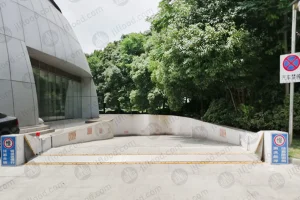
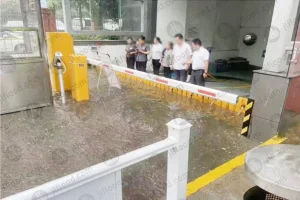
By leveraging fluid buoyancy and hydrostatic pressure, our automatic flood protection systems require zero electricity, zero human intervention, and zero maintenance sensors. Installed flush with driveway ramps or doorway thresholds, vehicles and pedestrians pass freely under normal conditions. When floodwaters accumulate, the rising water enters the subterranean basin, instantly lifting the high-strength barrier panel to seal the entrance against incoming surges.
Engineered for maximum reliability under extreme hydraulic heads, typhoon rainstorms, and grid failure scenarios.
Operates entirely via passive buoyancy and hydrostatic pressure. Ensures continuous structural protection during urban power grid blackouts and storm blackouts.
Constructed with aircraft-grade aluminum extrusions and reinforced stainless steel sub-frames, capable of supporting heavy municipal bus and fire engine axle loads daily.
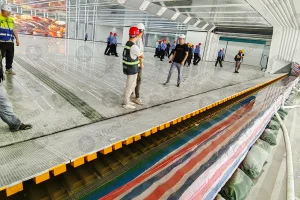
Features multi-layer automotive-grade EPDM rubber gaskets that expand under hydraulic force, achieving near-zero leakage rates in full-scale water testing pool trials.
The operational mechanism of the Junli hydrodynamic automatic flood barrier relies on Archimedes' Principle and hydrostatic equilibrium. Unlike motorized gates that rely on water sensors, PLCs, and electric actuators, the Junli system utilizes incoming floodwater as its sole motive force.
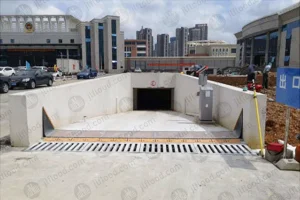
The foundation of the system consists of a modular recessed frame embedded into the concrete driveway or threshold floor. Inside this stainless-steel or hot-dip galvanized steel frame rests a hollow, structural aluminum panel module. Under dry conditions, the top panel sits completely flush with the surrounding pavement, presenting a smooth profile for vehicular transit up to H20/HS20 load ratings.
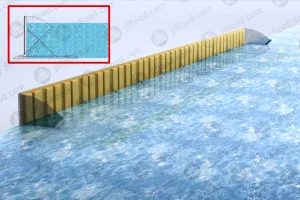
When heavy rainfall causes surface water accumulation exceeding the curb height, water naturally flows into the inlet grates of the subterranean chamber. As water fills the sealed lower basin, the specialized hollow aluminum panel—designed with calculated volumetric displacement—begins to float. The initial buoyant force rotates the panel along its continuous bottom hinge assembly.
As the floodwater level outside the building continues to rise, the hydrostatic head exerts horizontal force against the inclined barrier panel. This lateral water force pushes the panel upward and firmly locks it against side jamb seals and end stops. The greater the flood depth, the higher the horizontal thrust against the barrier panel, creating an increasingly tight seal against the EPDM elastomeric gaskets. When floodwaters recede, water drains naturally from the lower basin through a non-return drain orifice, allowing the barrier panel to lower smoothly back into its flush rest position.
Evaluating traditional sandbags, manual demountable barriers, electric gates, and Junli automatic hydrodynamic barriers.
| Evaluation Parameter | Traditional Sandbags | Manual Demountable Aluminum Stop Logs | Electric / Motorized Flood Gates | Junli Hydrodynamic Auto Quick Dam |
|---|---|---|---|---|
| Deployment Speed | 2 – 6 Hours (Requires labor team) | 30 – 60 Minutes (Manual setup) | 1 – 3 Minutes (Requires power) | Instant & Automatic (< 30 Seconds) |
| Human Power Required | Heavy (10–20 Personnel) | Medium (2–4 Technicians) | Low (1 Operator for switch) | Zero (Fully Autonomous Passive Operation) |
| Power Grid Dependency | None | None | Critical (Fails without backup power) | Zero (100% Unpowered Buoyancy Driven) |
| Sealing & Leakage Rate | High Leakage (Requires continuous pumping) | Moderate Leakage at joint intersections | Low Leakage (If gaskets intact) | Near-Zero Leakage (Validated Pool Test Certified) |
| Traffic Impact (Normal) | Blocks entrance during storage | Post sockets pose trip hazard | Raised curb creates bump | 100% Flush Drive-Over Surface (30T Load Rated) |
| Operational Lifespan | Single-use (Disposal required) | 5 – 8 Years (Seal degradation) | 8 – 10 Years (Motor/Sensor wear) | 20+ Years Maintenance-Free Frame |
Junli Technology custom-engineers flood barrier hardware for four primary sector verticals, ensuring strict adherence to civil engineering specifications, international building codes, and municipal resilience directives.
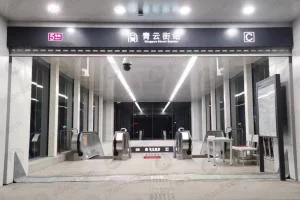
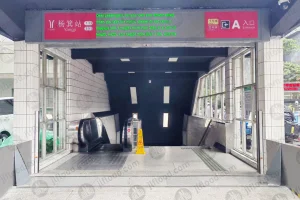
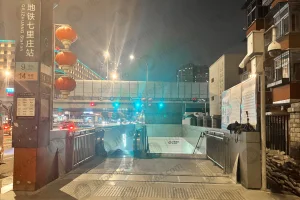
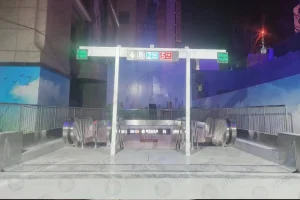
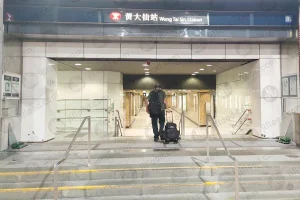
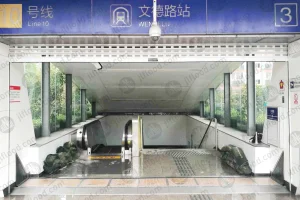
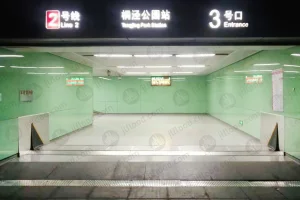
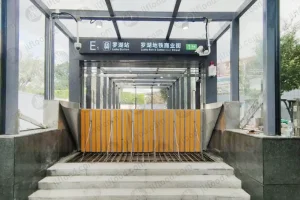
Subway passenger entrances, connection channels, ventilation shafts, and subterranean pedestrian walkways represent vulnerable flood ingress points during severe typhoons. As installed across Guangzhou Metro (Yangji Station), Dalian Metro, Beijing Metro, Suzhou Metro, and Hong Kong Rail Transit, Junli metro flood gates protect million-dollar signaling and rolling stock assets automatically without station master intervention.
Electric power transmission substations house high-voltage transformers, switchgear, and control rooms. Infiltration of surface floodwater causes catastrophic short circuits, multi-million-dollar equipment damage, and citywide blackouts. Junli substation barriers seal perimeter access gates, cable trench penetrations, and doorway thresholds against high hydrostatic heads.
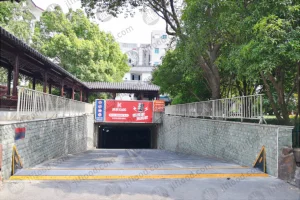
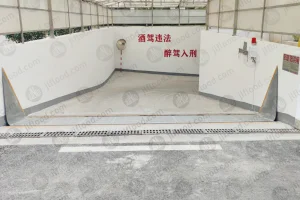
Modern shopping malls, hospitals, commercial office towers, and luxury residential complexes utilize underground parking facilities. Unprotected ramp openings allow urban runoff to submerge vehicles and building MEP rooms. Junli garage flood barriers provide a flush-mounted, aesthetic, 30-ton load-tested ramp seal that activates the instant water approaches the threshold level.
Underground street crossings, high-speed rail concourses, airport landside facilities, and municipal utility tunnels require reliable flood barrier protection certified by national civil defense standards. Junli's custom engineering capability delivers multi-span barrier modules covering span widths from 2 meters to over 20 meters with zero structural deflection.
As smart cities evolve, the integration of physical civil resilience assets with digital monitoring infrastructure becomes essential. The R&D team at Nanjing Junli Technology Co., Ltd. is pioneering three breakthrough technological initiatives scheduled for global deployment across our 2025–2035 product generations:
While the mechanical lifting mechanism remains 100% unpowered and passive for absolute fail-safe reliability, next-generation Junli barriers incorporate ultra-low-power NB-IoT and LoRaWAN wireless status sensors. Solar-backed or kinetic micro-generators send real-time telemetry alerts to city central emergency operations centers (EOC) the exact second a barrier panel begins rising, enabling municipal traffic rerouting before roadways are submerged.
Commercial marine and coastal industrial sites present aggressive corrosive environments due to salt spray and brackish water. Our metallurgical engineers are deploying fluorocarbon nano-coatings and anodized marine-grade 6063-T6 aluminum alloys that double resistance to pitting corrosion, guaranteeing a maintenance-free 25-year structural service life in coastal installations.
To reduce civil engineering excavation costs during retrofit projects on active subway lines and operational parking garages, Junli is introducing shallow-depth sub-frame templates that reduce required concrete foundation trenching depth by 35%, slashing installation turnaround from days to overnight shifts.
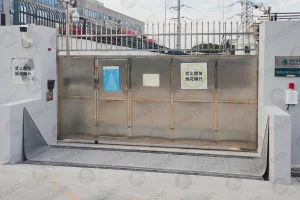
Review additional field-proven hydrodynamic flood barriers, surface-mounted subway gates, and self-closing barrier assemblies.
Comprehensive engineering & procurement guidance for MEP consultants, general contractors, and wholesale buyers.
Send us your entrance dimensions, design flood depth, and project CAD drawings. Our structural engineering team will deliver a customized hydrodynamic flood barrier layout proposal, civil interface specification, and direct wholesale quotation within 24 hours.


