
Engineered to deliver zero-electricity passive deployment, extreme structural load resistance, and 100% water-tight isolation for transit hubs, commercial portals, and high-voltage power substations.
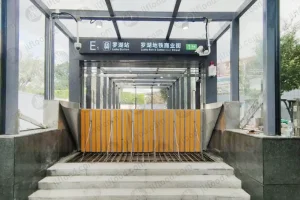
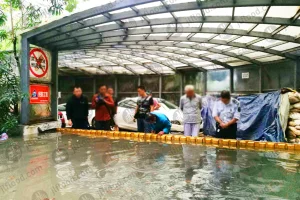
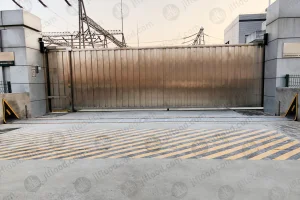
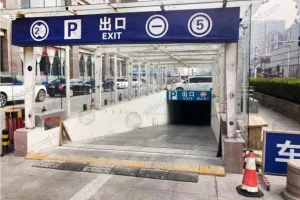
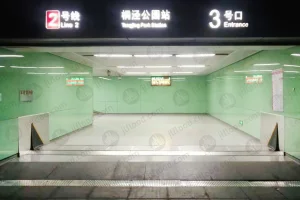
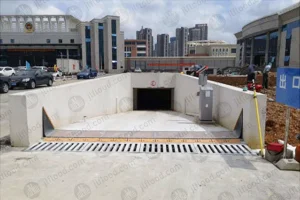
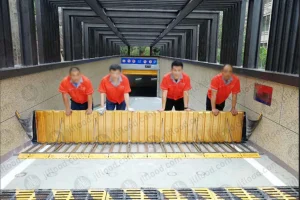
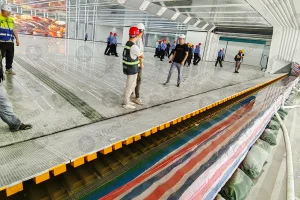
As extreme meteorological events, cloudburst rainstorms, and sea-level surges escalate globally, subterranean mass transit networks represent the most high-risk assets in modern civil infrastructure.
How incoming surface water energy converts directly into structural water-retaining force without electrical actuators.
Under normal operating conditions, the high-strength aluminum panel sits perfectly flush with the ground, housed within a stainless steel embedded foundation trench. Pedestrians, maintenance vehicles, and heavy transit equipment can drive directly across the structural top cover plate without operational disruption or trip hazards.
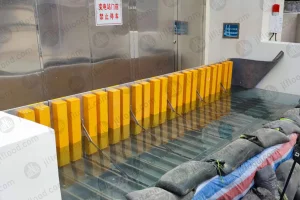
When flash flood waters breach the metro entrance threshold, water flows into the front intake grille of the recessed chamber basin. As the water level inside the basin rises, Archimedes' buoyancy principle forces the lightweight hollow-extrusion aluminum door panel to pivot upward along a precision stainless steel hinge axis.
As the flood level outside increases, the hydrostatic head pressure pushes directly against the exterior face of the erect barrier panel. This pressure compresses the high-density EPDM double-lip rubber seals around the side frame abutments and bottom hinge beam, achieving a dynamic seal that tightens as water depth increases.
The rotational moment driving panel deployment is calculated as: M_net = F_buoyancy × L_center - W_panel × L_gravity - M_friction. Because the engineered density of the multi-chamber extruded 6063-T6 aluminum panel is strictly calibrated below 1.15 g/cm³ relative to the effective hollow volume, a water depth of just 30 mm inside the intake basin generates sufficient force to initiate continuous upward rotation, achieving full vertical deployment (up to 90°) within 15 to 45 seconds depending on maximum structural height.
Comprehensive structural details for civil engineers, architectural specifiers, and procurement officers.
| Engineering Parameter | Standard Specification | Heavy-Duty Subterranean Grade | Testing Standard / Compliance |
|---|---|---|---|
| Primary Panel Material | Aviation-Grade 6063-T6 Aluminum Alloy Extrusion | Reinforced 6005A-T6 Structural Profile | GB/T 6892 / ASTM B221 |
| Embedded Base Frame | AISI 304 Stainless Steel (Passivated) | AISI 316L Marine-Grade Stainless Steel | EN 10088-2 / ASTM A240 |
| Sealing Elastomer | Co-Extruded Dual-Hardness EPDM rubber | Fluorocarbon / EPDM Composite with UV/Oil Resist | ISO 3939 / ASTM D2000 |
| Standard Retaining Height | 500 mm – 1,200 mm (Customizable) | 1,200 mm – 2,200 mm (Multi-Panel Array) | CJ/T 483-2015 Civil Defence |
| Single Module Clear Span | 1,000 mm – 6,000 mm continuous | Modular Splicing to >50 meters width | FEA Structural Hydrostatic Modeling |
| Ground Load Capacity | Vehicle Axle Load: 15 Tons (AASHTO HS-20) | Heavy Airport/Truck Load: 40-60 Tons | GB 50010 Reinforced Concrete Norm |
| Leakage Rate (Sealed State) | < 0.05 L/min per meter of perimeter | Zero Measurable Leakage (< 0.005 L/min/m) | FM 2510 / BS EN 12280 Standard |
| Response Mechanism | Passive Water Buoyancy Hydrodynamic | Hydrodynamic + Dual Manual Emergency Latch | Zero-Power Safety Standard |
Targeted flood control integration across critical structural zones within urban rail transit systems.
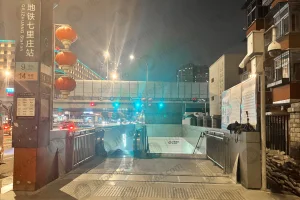
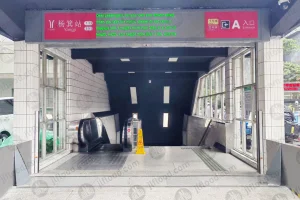
Surface stairwells and escalator landings are the primary entry points for urban flash floods. Flush-embedded hydrodynamic flood barriers installed at ground level immediately rise when surface water exceeds street curb levels, protecting passenger stairways and escalator pits from submersion.
Subway systems are heavily integrated with underground shopping plazas and commercial basements. Modular inter-connection flood gates serve as boundary security seals, preventing flooding from adjacent commercial structures from breaching the primary rail transportation tunnels.
Metro electrical infrastructure requires 100% dry conditions. Automatic flood gates placed at transformer room doorways and subterranean cable trenches protect high-voltage switchgear from water ingress during intense rainstorms, preventing catastrophic grid tripping.
Subterranean ventilation shafts located at sidewalk level can channel immense volumes of water directly into transit tunnels. Specialized automatic flip-up and vertical modular flood barriers seal ventilation openings when water accumulates around exterior louvers.
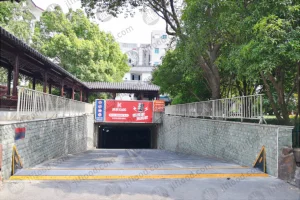
Wide subterranean vehicular access ramps leading into underground maintenance workshops and multi-story parking structures utilize wide-span modular hydrodynamic flood gates capable of supporting continuous 40-ton vehicle traffic under daily operations.
Why international contractors choose Nanjing Junli Technology for large-scale municipal infrastructure tenders.
Located in the industrial heartland of Jiangsu, China, Junli Technology integrates high-precision aluminum extrusion lines, automated robotic laser welding cells, CNC machining, and specialized EPDM vulcanization under one manufacturing roof. This vertical integration eliminates tier-2 markups and cuts production lead times by up to 40% compared to European suppliers.
Our 20,000+ m² manufacturing facility produces over 15,000 linear meters of modular flood gates annually. With standardized modular tooling, custom site dimensions can be engineered, manufactured, pool-tested, and containerized for sea freight within 15–20 business days.
Unlike generic metal fabricators who deliver unverified assemblies, Junli maintains a full-scale hydraulic testing basin. Every custom modular batch is assembled in-factory and subjected to a 100% depth hydrostatic head water retention test, complete with video documentation and third-party inspection certificates before dispatch.
A head-to-head performance comparison of underground transit flood mitigation technologies.
| Evaluation Vector | Junli Hydrodynamic Modular Gate | Manual Aluminum Stop-Logs | Motorized Vertical Lift Gates |
|---|---|---|---|
| Power Grid Requirement | Zero (100% Passive Hydraulic) | Zero (Manual Assembly) | High (Requires AC / Backup Gen) |
| Human Operator Dependency | Zero (Automatic Reaction) | High (Must be manually carried & stacked) | Medium (Requires sensor or remote command) |
| Deployment Speed | 15 – 45 Seconds | 20 – 60 Minutes (Labor Intensive) | 1 – 3 Minutes |
| Failure Modes during Flash Flood | None (No mechanical motors or grid) | Late deployment, lost components, labor shortage | Power outage, sensor failure, motor burnout |
| Aesthetic & Space Footprint | 100% Hidden Flush In-Ground | Requires external storage warehouse | Bulky overhead frames & mechanical posts |
| Lifetime Maintenance Cost | Low (Visual check & EPDM inspection) | Low (Storage overheads) | High (Motor, gearbox, battery replacement) |
Combining pure mechanical reliability with modern smart city operational monitoring networks.
While the structural barrier operates 100% mechanically without external power, optional low-power IoT telemetry modules (LoRaWAN / NB-IoT) transmit real-time angular position data, basin water depth, and panel seal engagement directly to the central metro control room.
Junli supplies parametric Revit files, IFC BIM objects, and 3D CAD step models for seamless integration into metro infrastructure design workflows. Engineers can simulate dynamic water intrusion scenarios directly within their Building Information Modeling software.
For high-security military or civil defense transit nodes, our systems can be upgraded with pneumatic or hydraulic manual release overrides, allowing remote operators to pre-deploy barriers prior to severe typhoon landfall.
Seamless engineering alignment with local civil construction practices, foundation pit preparation, and international standards.
Junli provides custom-engineered anchor templates, rebar clearance layout drawings, and concrete pouring guidelines. The stainless steel base frame is anchored into C35/40 reinforced concrete using expansion chemical anchors, ensuring structural load transfer into the station foundation slab.
For existing metro stations where excavation into the ground slab is restricted due to buried electrical conduits or structural post-tensioning cables, surface-mounted flip-up barriers (Model HM4D-0006E) can be anchored directly onto the finished tile floor with zero pit digging.
Our products are manufactured under ISO 9001 (Quality Management), ISO 14001 (Environmental Management), and ISO 45001 (Occupational Health & Safety). Equipment complies with EU CE requirements, FM 2510 flood barrier standards, and Chinese National Civil Defence Standard CJ/T 483-2015.
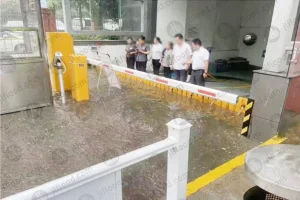
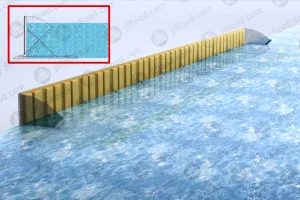
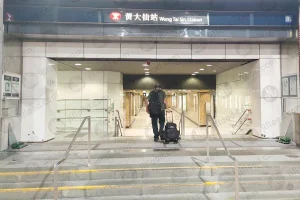
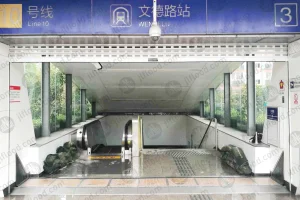
Select from our certified range of surface-mounted, embedded, flip-up, and hydrodynamic automatic flood barrier models.
In-depth technical answers addressing civil integration, maintenance protocols, and operational safety.
The hydrodynamic system relies entirely on fluid dynamics and gravity. As flood water flows into the embedded stainless steel basin, Archimedes' buoyancy principle forces the lightweight hollow aluminum alloy panel to pivot upward automatically. Hydrostatic pressure from the accumulating flood height against the outer face locks the panel vertically and compresses the EPDM seals tightly against the side abutments. Because there are no electrical motors, hydraulic pumps, pneumatic lines, or digital sensors involved in panel deployment, the system is 100% immune to electrical grid failure, short circuits, or battery degradation—which are the primary causes of legacy system failure during severe typhoons.
Standard single-leaf panels accommodate clear opening spans up to 6.0 meters and retaining heights ranging from 500 mm to 2,000 mm. For wider openings such as multi-lane vehicle ramps, pedestrian plazas, or railway depot entrances exceeding 50 meters, Junli utilizes a modular splicing architecture with removable or fixed central stainless steel support mullions. Internal high-tensile connection rods ensure continuous load transfer across the entire installation width while maintaining strict seal compression integrity.
The foundation basin is equipped with a stainless steel surface intake grating designed with a calibrated slot pattern that filters out large debris, stones, and floating trash. The bottom channel features a sloped drainage trough connected to the station's stormwater discharge network or auxiliary sump pump. During routine maintenance checks, the top cover plates can be unbolted in minutes for quick removal of accumulated silt or leaves using high-pressure water jetting.
Yes. Standard Junli embedded flood barrier systems are structurally certified to meet AASHTO HS-20 and Chinese Class-A vehicular loading standards (15-ton axle load). For specialized applications such as metro maintenance depots or airport landside access gates, our heavy-duty profiles (Model HM4D-0006C) feature reinforced internal aluminum ribs and thicker stainless steel frame channels capable of supporting point loads up to 60 tons without panel deformation.
The structural aluminum extrusion panels and stainless steel foundation frame are engineered for a service life exceeding 30 to 50 years under subterranean atmospheric conditions. The dual-hardness EPDM rubber seals are treated with anti-aging, UV-stabilized, and ozone-resistant compounds, providing an operational lifespan of 10 to 15 years. Seals can be easily replaced on-site without removing the main structural frame, minimizing long-term maintenance expenditure.
Nanjing Junli Technology maintains a dedicated international engineering support office. We provide detailed 2D CAD civil interface shop drawings, 3D BIM parametric models (Revit/IFC), structural finite element analysis (FEA) calculation books, and customized foundation pit pouring templates for every project order. Additionally, all technical documentation, factory test reports, and installation manuals are furnished in professional English.


