
Explore our precision-engineered non-electric automatic flood barriers, field-proven across municipal metro systems, power grids, and subterranean infrastructure.
Quantitative metrics derived from full-scale hydraulic stress tests, finite element analysis (FEA), and real-world typhoon deployment logs.
Rapid global urbanization coupled with severe climate volatility has reshaped civil engineering imperatives. Flash flooding, sudden cloudbursts, and extreme storm surges present catastrophic risks to subterranean infrastructure—most notably metro transit systems, underground parking facilities, commercial basements, and power distribution substations. Historically, civil defense relied on active flood gates requiring human deployment or electromechanical actuators connected to municipal power grids.
However, forensic post-disaster analyses reveal a critical vulnerability: The exact meteorological phenomena that trigger urban flooding almost universally precipitate municipal power grid collapse. Electrical sub-stations short-circuit, backup diesel generators fail due to subterranean water ingress, and emergency personnel are blocked by surface gridlock. When active flood barriers lose power or human activation fails, structural inundation becomes inevitable.
This systemic vulnerability has catalyzed a global transition toward hydrodynamic non-electric automatic flood baffles. Built upon foundational hydro-mechanical physics, these passive systems utilize the kinetic and hydrostatic energy of the floodwaters themselves to automatically deploy, lock, and retain severe water heads without human intervention, sensors, or external power.
Dependent on PLC controllers, optical sensors, wiring conduits, and grid power. Vulnerable to power blackouts, sensor fouling by flood debris, motor burnt-outs, and maintenance neglect over extended dormant periods.
Operates on pure buoyancy principles ($F_b = \rho V g$). Zero energy draw, zero reliance on external signals, instantaneous automatic response upon water entering the base chamber, and 100% fail-safe operational continuity.
Evaluating structural flood defense methodologies across capital expenditure (CAPEX), operational expense (OPEX), reliability indices, and life-safety compliance.
| Flood Defense Technology | Power Dependency | Response Time | Human Operating Risk | Dynamic Vehicle Loading | 20-Year Total Cost of Ownership (TCO) |
|---|---|---|---|---|---|
| China Hydrodynamic Non-Electric Baffles | Zero (100% Passive) | < 0.5 Seconds | Zero (Automated) | Heavy Duty (EN 124 D400 / 40T) | Lowest (Minimal Maintenance) |
| Motorized Vertical Drop Gates | High (Grid + GenSet) | 30 - 120 Seconds | Moderate (PLC/Manual) | N/A (Overhead Mount) | High (Actuator & Battery Servicing) |
| Manual Aluminum Stop Logs | Zero | 30 - 90 Minutes | Severe (Personnel Required) | None (Temporary) | Moderate (High Labor Cost Risks) |
| Inflatable Rubber Dams | High (Air Compressor) | 10 - 20 Minutes | Moderate (Control System) | None | High (Puncture & Polymer Degradation) |
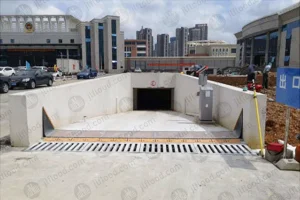
The operational mechanism of China-manufactured non-electric automatic flood baffles (such as the Hm4e and Hm4d structural series) relies on a precision-balanced flush ground embedded assembly. Under dry conditions, the top plate of the baffle rests perfectly flush with the road or doorway surface, acting as a structural trench cover capable of handling continuous heavy vehicular traffic.
The unit comprises a ground-embedded foundation container (receiving basin), a structural buoyancy door panel, modular side wall seals, and specialized end wall sealing columns. When surface runoff exceeds the threshold kerb level, floodwater gravitates through intake grates into the base chamber.
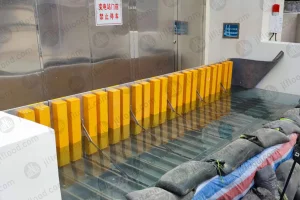
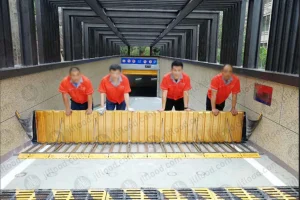
As water accumulates inside the chamber, the buoyant density differential between the hollow engineered panel and the surrounding fluid initiates vertical rotation around a precision stainless-steel hinge axis. As water level rises, the panel automatically rotates upward to a $45^\circ - 60^\circ$ incline, engaging dynamic side rubber seals against structural end plates, effectively blocking the entry clear opening.
To guarantee a 25-year structural service life within hyper-corrosive urban environments, Chinese manufacturers utilize advanced alloy selection and precision extrusion manufacturing:
Strategic advantages in industrial clusters, metallurgical processing depth, modular customization, and rapid scale execution.
China houses over 70% of the world's large-tonnage aluminum extrusion presses (10,000+ ton capacity). This allows direct single-piece extrusion of wide-span flood gate panels without structural weld seams, drastically reducing fatigue failure risks.
Integrated cluster supply chains in Jiangsu and Zhejiang provinces combine high-speed 5-axis CNC machining, continuous robot laser welding, and automated EPDM vulcanization under unified ISO 9001/14001 quality management systems.
Wholesale procurement directly from tier-1 Chinese manufacturers yields 40% to 60% cost efficiencies compared to Western European or North American equivalents, while meeting or exceeding global structural performance mandates.
Non-electric automatic flood barriers engineered in China are designed with modular scalability, supporting customized installations across critical civil and commercial sectors.
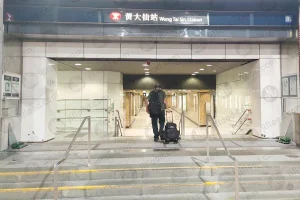
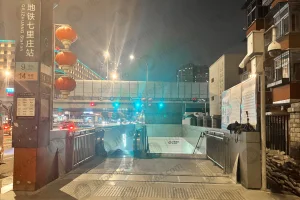
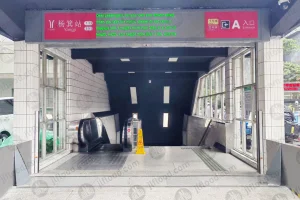
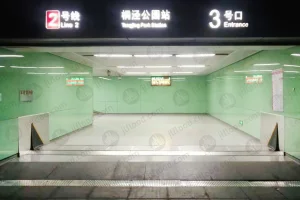
Subway stations present severe life-safety vulnerabilities during sudden storm events. Floodwaters overwhelming entry steps can inundate tunnels in minutes. China's metro-certified barriers (e.g., deployed across Guangzhou Metro, Beijing Subway, and Shenzhen Metro) feature embedded installation flush with pedestrian plazas. As surface runoff pools at the station portal, the barrier automatically rises to form a continuous 0.6m to 1.5m retaining wall, ensuring uninterrupted station safety.
Electrical transformers, switchgear rooms, and cable trenches require continuous operational dryness. A flooded 500kV substation causes widespread grid collapse. Flange-mounted and embedded non-electric gates installed at perimeter vehicle entry points and equipment hall doors guarantee 24/7 protection against flash inundation without demanding site security personnel.
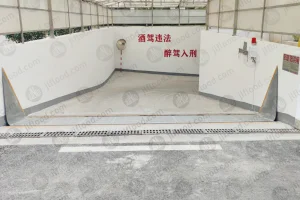
Subterranean garages represent major property liability risks. Flip-up and modular hydrodynamic barriers mounted at parking ramp crests allow thousands of vehicles to transit daily without obstruction. During night cloudbursts when building management is absent, the system activates passively, saving millions in vehicle damage and building infrastructure repair costs.
Browse our specialized surface-mounted, modular hydrodynamic, and substation gate configurations designed for international municipal and industrial procurement.
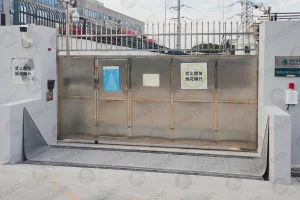
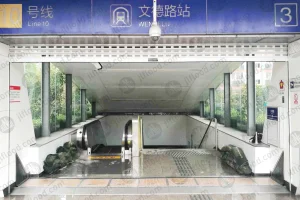
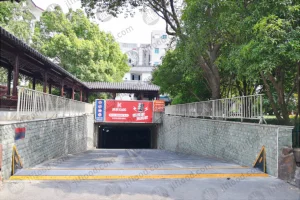
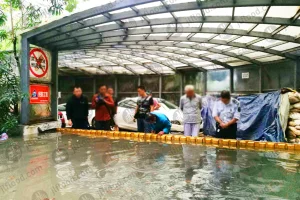
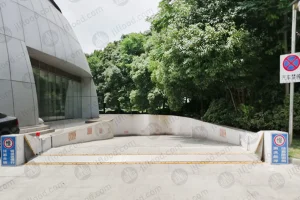
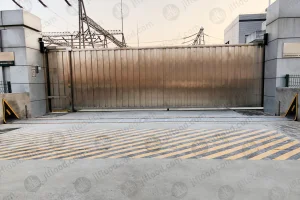
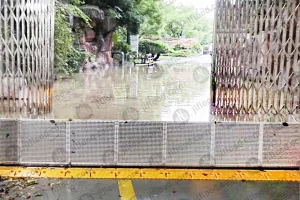
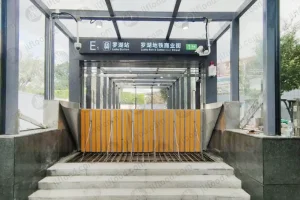
When engineering consultants, EPC contractors, and municipal authorities source non-electric automatic flood baffles from China, rigorous quality verification protocols must be established to satisfy insurance underwriting standards (such as FM Approvals 2510) and international building codes (BS EN 1990/1991).
Clear, authoritative answers addressing design specs, civil work interfaces, maintenance regimes, and global shipping options.
The barrier panel is housed flush within a ground-embedded foundation trench. When surface floodwater reaches the entrance, water flows into the chamber through specialized inlet grates. The accumulating water creates hydrodynamic buoyancy forces under the lightweight hollow aluminum panel ($F_b = \rho V g$). As the fluid level rises, the panel automatically floats upward and rotates along a stainless steel hinge axis until it engages heavy-duty EPDM rubber seals, creating an impenetrable water barrier. Zero electrical power, wiring, PLC logic, or manual labor is required.
Civil requirements involve casting a reinforced concrete trench according to the manufacturer’s structural embedment drawings. The trench must include an integrated drain connection linked to the site’s stormwater or sump pump system. This ensures that minor rainwater accumulation during routine storms drains away quickly, preventing false deployments. Chinese manufacturers supply full CAD/BIM templates and structural rebar layout guides to local contractors.
The system incorporates a debris-settling trough at the base of the embedded frame to collect fine silt and leaves beneath the panel's rotational arc. The panel's leading edge features angled deflection plates that push floating items away during deployment. For sub-zero climate zones, low-wattage self-regulating heating cables can be integrated into the foundation base to prevent ice bonding, maintaining 100% operational readiness year-round.
Standard single-leaf modules support clear widths up to 6.0 meters and retaining heights ranging from 0.5 meters to 2.0 meters. For wide openings such as multi-lane garage ramps (12m to 30m+), modular multi-leaf units are connected using stainless steel structural mullions or interlocking side seals. Custom engineering is routinely conducted to fit unique architectural profiles.
Maintenance overhead is minimal compared to electrical gates. Recommended protocols involve semi-annual inspection of the foundation trench to remove accumulated sediment or debris, visual inspection of the EPDM side and bottom rubber gaskets for elasticity, and periodic manual lifting tests to confirm smooth hinge rotation. Replacement seal kits are stocked and standardized for fast global dispatch.


