Explore our certified hydraulic and self-closing barrier series engineered for critical urban infrastructure.
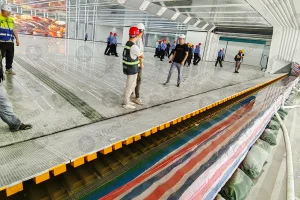
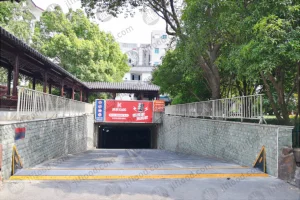
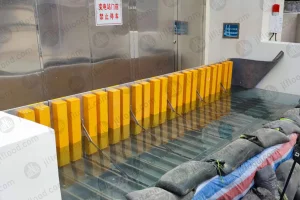
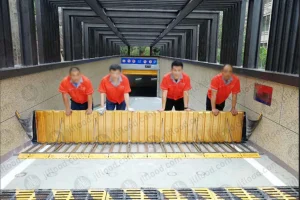
Understanding how buoyancy-driven hydrodynamic pressure eliminates reliance on human intervention, sensors, and external electrical grids during severe cloudburst events.
Unlike motorized gates or manual aluminum stop logs, a pop-up automatic flood barrier device operates strictly on hydro-buoyancy physics. The barrier door is installed flush with the finished roadway inside an embedded ground basin. When flash flood waters overflow the municipal drainage network and reach the trigger threshold, water flows through bottom intake grates into the retention basin.
As water fills the internal basin, Archimedes' principle engages: the high-density hollow door panel floats upward. As the water head rises, hydrostatic pressure pushes the panel tightly against vertical side wall gaskets, forming an impenetrable barrier seal without requiring a single watt of electricity.
During dry conditions, pop-up flood barriers must withstand continuous heavy traffic loads. Engineered using extruded high-tensile 6063-T6 aluminum alloy or structural 304/316 stainless steel, top leaf panels are designed to support heavy vehicle axle weights rated up to A15 to F900 (up to 90 metric tons).
Anti-slip top plates prevent vehicle sliding during rain, while internal stainless steel torsion shafts maintain structural rigidity across long clear spans up to 6.0 meters per single leaf array, modularly expandable to cover 100+ meter perimeter openings.
A comparative structural evaluation for procurement officers, municipal engineering consultants, and real estate asset managers.
| Evaluation Parameter | Hydrodynamic Pop-Up Gate (Junli) | Motorized Hydraulic/Electric Gate | Manual Modular Stop Logs |
|---|---|---|---|
| Power Dependence | 0% (100% Passive Hydro-Buoyant) | High (Requires Grid + Emergency UPS) | 0% (Manual Assembly) |
| Human Operator Risk | Zero Staff Needed (Fully Automatic) | Requires Remote or Push-Button Start | High Risk (Requires On-site Labor) |
| Deployment Speed | Immediate (< 30 seconds upon water ingress) | 1 to 3 minutes (Slower motorized) | 30 to 120 minutes (Labor heavy) |
| Blackout Vulnerability | Immune to Power Outages | Vulnerable if Backup Generators Fail | Immune |
| Annual Maintenance Cost | Low (Debris Flushing & Seal Inspection) | High (Hydraulic Fluid, Motors, Sensors) | Low (Storage & Gasket checks) |
| 20-Year TCO Cost Index | Lowest Overall TCO | Moderate to High TCO | High (Labor & Operational Risk) |
Leveraging state-of-the-art aluminum extrusion infrastructure, strict hydrostatic pool testing, and scalable OEM manufacturing.
Our factory utilizes high-grade EPDM (Ethylene Propylene Diene Monomer) composite rubber gaskets certified for seawater, industrial runoff, and UV exposure. The triple-seal perimeter design ensures leakage rates far lower than international standards (< 0.05 L/hr per meter of seal), validated under static water head pressures up to 2.0 meters.
Every batch of Nanjing Junli flood barriers undergoes 100% pre-shipment testing in specialized full-scale water simulation pools. Frame tolerance is held strictly within ±1.0mm using automated laser cutting and robotic welding, guaranteeing seamless installation into civil engineering foundations.
From custom anodized color matching for urban landscape architecture to tailored structural depths for shallow slab foundations, Chinese manufacturing integration provides international distributors with unmatched cost efficiencies and rapid lead times of 15 to 25 days for large project contracts.
Deploying automatic pop-up flood defense across diverse commercial, transit, and energy asset classes.
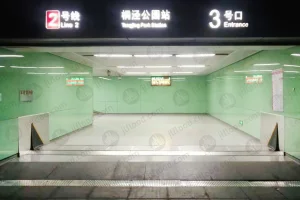
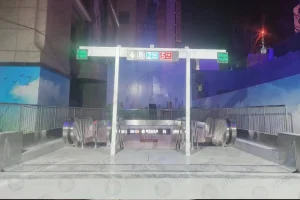
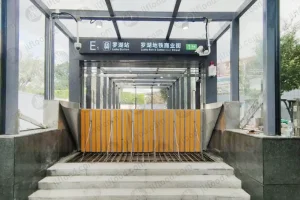
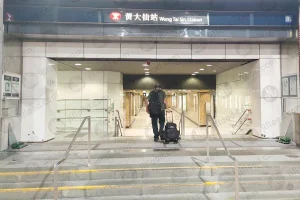
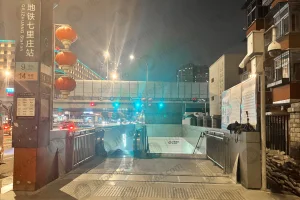
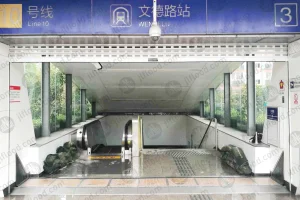
Subway entrances are primary vectors for catastrophic urban inundation. Embedded hydrodynamic barriers sit flat at station thresholds, maintaining zero impedance to pedestrian foot traffic. When storm surges rise above kerb level, the panel pops up automatically to seal off underground station concourses, saving billions in transit equipment assets.
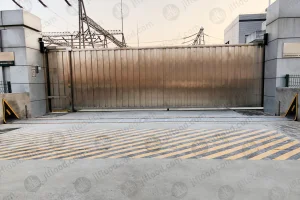
Electrical transformers and power distribution grids require uninterrupted flood protection. A single water breach can cause regional blackouts. Self-closing flip-up and automatic embedded barriers prevent flash floods from penetrating power plant equipment rooms without relying on grid power during storm-induced outages.
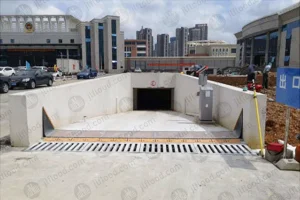
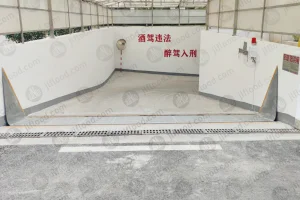
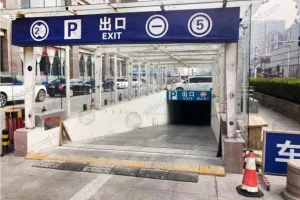
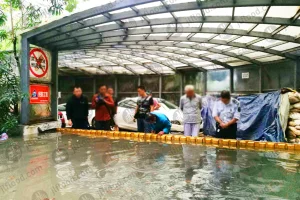
Commercial shopping centers, residential towers, and underground parking garages face severe water ingress during torrential downpours. Heavy-duty pop-up barriers installed at the top or bottom of driveway ramps allow vehicles to drive over smoothly every day, rising within seconds when surface water collects.
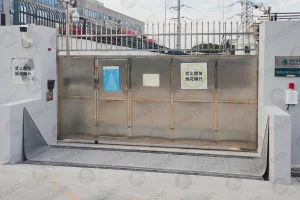
To prevent hazardous chemical runoff or water intrusion into cleanroom production floors, factory perimeters require continuous water-retaining boundaries. Modular pop-up barrier arrays span wide logistics gates while supporting fully loaded semi-truck passage.
Reference specifications and benchmark price ranges for procurement planning. (Contact engineering for tailored project quotes).
| Model Code | Mechanism Type | Standard Height | Max Span / Unit | Load Rating Class | Est. Wholesale FOB Price Range |
|---|---|---|---|---|---|
| HM4D-0006C | Heavy Duty Hydrodynamic Embedded | 500mm – 1000mm | 6.0 Meters | F900 (Heavy Truck / Aircraft) | $450 – $780 / Meter |
| HM4E-006C | Standard Embedded Hydro-Buoyant | 300mm – 600mm | 4.5 Meters | D400 (Commercial Ramp) | $320 – $550 / Meter |
| HM4D-0006D | Self-Closing Flip-Up Passive | 400mm – 800mm | 5.0 Meters | C250 (Light Commercial) | $280 – $490 / Meter |
| JL-Metro Surface | Surface-Mounted Flip-Up Barrier | 300mm – 500mm | 3.0 Meters | A15 (Pedestrian Only) | $210 – $380 / Meter |
Addressing key civil structural, operational, and maintenance queries from global buyers.
Complete project solutions tailored to subway lines, electrical infrastructure, and commercial facilities.