Executive Summary: The Global Paradigm Shift in Flood Mitigation Engineering
In an era characterized by unprecedented climate volatility, severe typhoons, and localized torrential rainbursts, traditional flood defense systems—such as manual sandbagging, temporary demountable aluminum stop-logs, and electrically driven flood gates—are failing to safeguard subterranean assets. Urban centers, underground mass transit networks, high-voltage electrical substations, and multi-level commercial parking structures face catastrophic financial losses due to human operational delays and municipal power grid failures during cloudburst events.
This industry whitepaper provides structural engineers, municipal procurement directors, civil defense contractors, and commercial facility managers with a comprehensive analysis of Wholesale Quick Dam Floodgate Manufacturers, evaluating hydrodynamic automatic flood gate technology, total cost of ownership (TCO) matrices, procurement frameworks, and China's Industry 4.0 supply chain resilience advantages.
Global Flood Risk & Urban Infrastructure Vulnerabilities
Urban flooding dynamics have evolved rapidly due to expansive concrete coverage, insufficient stormwater drainage network capacity, and extreme precipitation anomalies. Metropolitan areas across North America, Europe, East Asia, and the Middle East are experiencing intense waterlogging where water ingress occurs within minutes.
The Failure Modes of Legacy Flood Mitigation Systems
- Manual Sandbag Deployments: Labor-intensive, slow deployment (requires 2–4 hours), high disposal costs post-event, and susceptible to severe interstitial leakage under sustained hydrostatic heads.
- Demountable Aluminum Stop-Logs: Require manual retrieval from storage facilities and on-site assembly. In high-traffic metro hubs or multi-tenant commercial centers, staff are often absent or unable to navigate flooded access roads during off-peak hours.
- Electrically & Hydraulically Actuated Gates: Highly vulnerable to power grid blackouts, control board water damage, hydraulic line leaks, and actuator motor burnout at the precise moment severe storms hit.
| Technology Type | Activation Mechanism | Response Time | Power Grid Reliance | Maintenance & Lifecycle Cost |
|---|---|---|---|---|
| Manual Sandbags | Human Labor | 120 - 240 Mins | None | High (Single-use waste) |
| Aluminum Stop-Logs | Manual Assembly | 30 - 60 Mins | None | Moderate (Storage & logistics) |
| Electric Motorized Gates | Sensor / Controller | 1 - 3 Mins | High (Fails on Blackout) | Very High (Electronics & Motors) |
| Junli Hydrodynamic Automatic Gate | Pure Water Buoyancy | < 0.1 Seconds | Zero (100% Passive) | Low (20+ Year Service Life) |
Hydrodynamic Self-Rising Floodgate Mechanism & Technical Architecture
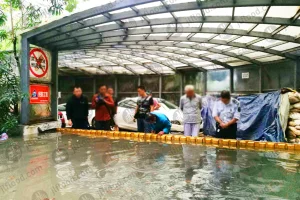
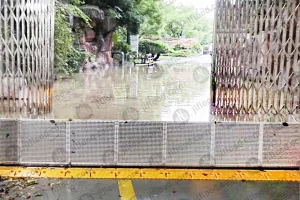
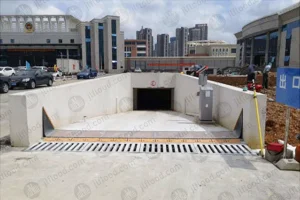
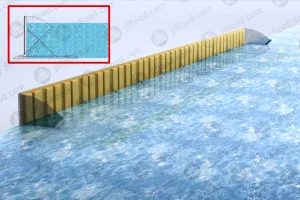
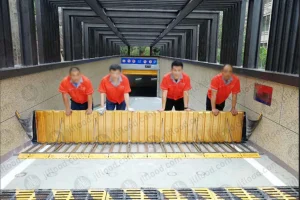
The hydrodynamic automatic flood barrier (often referred to in wholesale procurement specifications as self-closing or self-rising quick dam flood gates) represents a pinnacle of civil defense engineering. Manufactured by specialists such as Nanjing Junli Technology Co., Ltd., these barriers remain embedded flush with the road surface during normal conditions, allowing unhindered passage of heavy vehicular traffic, including buses and emergency vehicles.
Fluid Dynamics & Mechanical Principles
- Water Inflow & Chamber Flooding: As surface runoff reaches the threshold kerb level, floodwater enters the recessed bottom foundation chamber through specialized inlet grilles.
- Hydrodynamic Buoyancy Activation: The internal hollow door leaf panel, constructed from high-strength marine-grade 6063-T6 extruded aluminum alloy or stainless steel, harnesses natural water buoyancy to initiate upward tilting.
- Self-Locking Hydrostatic Seal: As the water level inside the chamber continues to rise, hydrostatic head pressure pushes the rising panel against heavy-duty structural upright frames. High-elasticity EPDM rubber gaskets form a continuous, airtight, and watertight seal along the bottom and side perimeter profiles.
- Automatic Reset: Once floodwaters recede, water drains naturally from the foundation basin through integrated drainage outlets, allowing the door panel to gently lower back into its flush recess without manual intervention.
Triple EPDM Sealing
Engineered with multi-layered automotive-grade EPDM seals designed to withstand water pressure up to 2.0 meters design head without structural leakage.
Heavy Vehicle Loading
Standard foundation frames are load-rated up to AASHTO HS-20 / Eurocode 40-tonne axle limits, allowing seamless daily car and truck driveover.
Modular Length Scaling
Custom clear spans ranging from 2.0m single driveways to multi-leaf interconnected arrays exceeding 50m for metro plaza entrances.
China Industry 4.0: Supply Chain Resilience & Cost-Efficiency Advantages
Global EPC procurement managers and municipal buyers seeking wholesale quick dam floodgate quotes increasingly look to specialized Chinese manufacturing centers like Nanjing Junli Technology Co., Ltd. China’s advanced industrial ecosystem offers unparalleled advantages in structural manufacturing, technical customization, and supply chain speed.
1. Integrated Precision Manufacturing Facilities
Nanjing Junli Technology operates high-precision CNC laser cutting, automated robotic welding, multi-axis bending, and dedicated aluminum surface anodization/fluorocarbon spray coating lines. Manufacturing under rigorous ISO 9001 and ISO 14001 quality management standards guarantees dimensional tolerances within ±0.5mm, ensuring smooth field embedment and seal alignment.
2. In-House Hydraulic Testing Pool & Verification
Unlike general metal fabricators or commercial trading companies, Junli maintains a full-scale hydraulic testing basin. Every custom-built order undergoes full hydrostatic water-retaining verification prior to export packing. Customers receive serialized water-testing video logs, material mill test certificates (MTC), and third-party inspection compliance documentation with every shipment.
3. Cost Optimization & Direct Factory Wholesale Pricing
By leveraging concentrated industrial raw material clusters in Jiangsu Province and streamlined automated production, Chinese manufacturers deliver premium hydrodynamic flood barrier systems at a 30% to 50% cost advantage compared to Western European or North American counterparts—without compromising structural integrity or sealing longevity.
Global Commercial & Industrial Application Scenarios
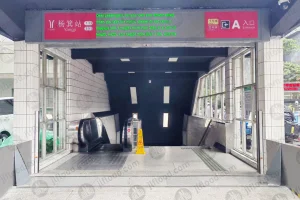
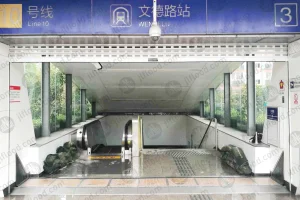
Scenario A: Underground Metro & Rail Transit Interchanges
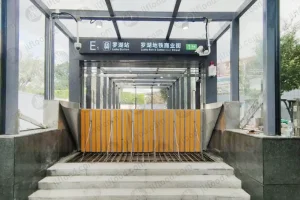
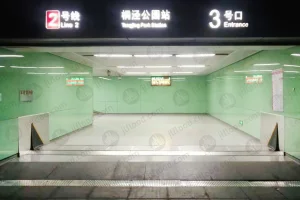
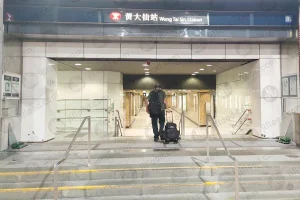
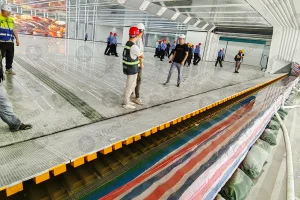
Subway entrances, pedestrian connecting channels, and ventilation shafts represent extreme risk zones where floodwater entry can inundate subterranean track networks, ruin electrical signal cabinets, and endanger thousands of passengers. Junli hydrodynamic barriers (such as the Hm4d-0006E metro series) are deployed across operating subway networks in major cities including Guangzhou, Beijing, Suzhou, Nanjing, Shenzhen, and Hong Kong.
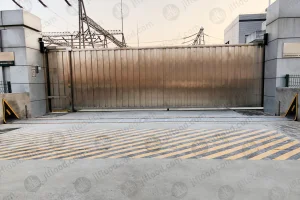
Scenario B: Electrical Power Substations & Utility Enclosures
A single flash-flood event at a high-voltage transformer substation can cause regional grid blackouts lasting weeks. Surface-mounted and embedded quick dam floodgates provide automated 24/7 perimeter protection for transformer rooms, cable trench entries, and substation access gates, securing vital energy infrastructure.
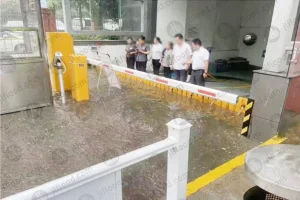
Scenario C: Commercial Center Car Parks & Residential Basements
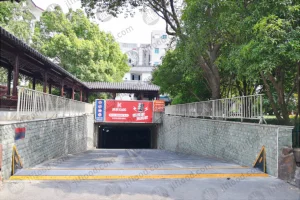
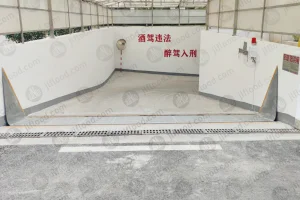
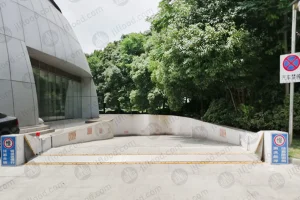
Underground garages in shopping plazas (e.g., Wanda Plaza facilities) and residential complexes require wide clear-span ramp protection. Flush embedded hydrodynamic barriers allow thousands of vehicles to cross daily without noise or vibration, rising automatically during sudden urban rainfall to protect parked vehicles and electrical elevators.
Scenario D: Airport Landside Facilities & Industrial Plants
Chemical processing plants, airport cargo basements, and civil defense structures utilize heavy-duty flip-up and hydrodynamic flood gates to contain chemical spills or isolate critical facilities against rising river levels during monsoon seasons.