
High-performance automatic flood barriers certified for metro transit, power grid substations, commercial driveways, and heavy-duty municipal underground access points.
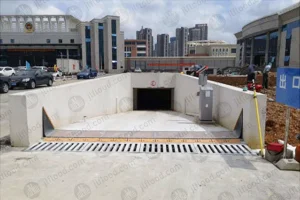
In modern urban civil defense engineering and infrastructure flood risk mitigation, traditional flood prevention tools—such as manually assembled aluminum stop logs, sandbags, and motor-driven electric flip-up flood barriers—have proven fundamentally vulnerable during catastrophic flash floods. The primary vector of failure in motorized and manual systems stems from three structural realities: human operational lag during sudden cloudburst events, electrical grid collapse caused by storm surges, and mechanical sensor corruption due to debris accumulation.
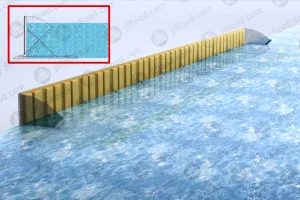
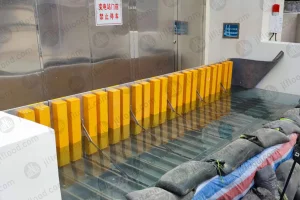
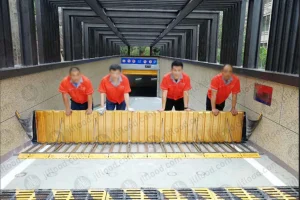
A Hydrodynamic Self-Closing Flood Barrier System solves these critical resilience gaps by operating entirely on hydrostatic and hydrodynamic principles. Built flush into ground level within access roads, driveways, subway station openings, or electrical transformer vault portals, the self-closing flood barrier panel rests horizontally under ambient conditions. Vehicles and pedestrians pass over the embedded structure without hindrance. However, when floodwaters reach a predefined critical threshold, incoming water naturally flows into the underground containment chamber. Leveraging Archimedes' principle of buoyancy alongside calculated hydrodynamic leverage, the internal buoyant core drives the barrier panel to pivot upward automatically. As water levels continue to rise, hydrostatic pressure exerts massive lateral force against the panel back, compressing high-density EPDM elastomeric sealing gaskets into a impenetrable, water-tight barrier.
This zero-energy, zero-manpower architecture ensures 100% operational readiness 24/7/365, making self-closing flood gate equipment the definitive global specification for municipal planning authorities, commercial real estate developers, and utility grid operators worldwide.
Operates entirely without external electricity, hydraulic pumps, emergency generators, PLC controllers, or optical sensors. Immune to grid blackouts and storm-induced short circuits.
Deploys within seconds of water ingress. Removes human error, staff response delays, traffic gridlock liabilities, and middle-of-the-night emergency deployment failures.
Engineered with high-tensile structural aluminum alloys and stainless steel load ribs, capable of withstanding heavy vehicular rollover up to AASHTO HS-20 and Eurocode 60-ton axle limits.
An in-depth look into the metallurgical composition, sealing elastomeric chemistry, and structural loading calculations that ensure long-term survivability in hostile urban environments.
The mechanical efficiency of a self-closing flood gate equipment array relies on a self-reinforcing sealing feedback loop. When water floods the basin, the initial movement is powered by the buoyant force ($F_b = \rho_{water} \cdot V_{displaced} \cdot g$). As the panel rotates to a 60-degree to 90-degree incline, the incoming floodwater height creates a horizontal force vector against the front face of the barrier.
This hydrostatic pressure ($P = \rho \cdot g \cdot h$) forces the rear panel perimeter into structural alignment with the sidewall frame and bottom base plate. The higher the floodwater rises, the greater the compressive force exerted against the primary EPDM elastomeric gaskets. Unlike mechanical gates where seals degrade due to fixed mechanical latching force, self-closing flood gates scale their sealing compression dynamically with the flood severity, resulting in virtually zero-leakage performance under extreme hydrostatic heads.
China has established an unassailable manufacturing advantage in large-scale flood mitigation equipment through raw material integration, robotics automation, and full-scale hydraulic testing facilities.
Chinese manufacturing hubs in Jiangsu, Zhejiang, and Guangdong combine high-tonnage aluminum extrusion presses, precision laser cutting, automated TIG/MIG welding, and anodizing lines under unified quality oversight.
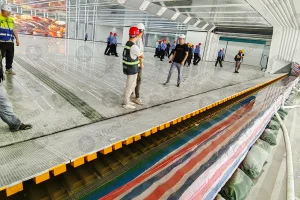
Leading OEM factories maintain dedicated deep-water hydraulic test pools equipped with high-volume pumps to simulate extreme flood velocities, hydrostatic heads, and seal leakage measurements prior to export containerization.
Direct factory Sourcing reduces capital expenditure by 35% to 50% compared to Western regional suppliers, allowing municipal contractors and distributors to scale flood protection across entire infrastructure networks.
When selecting a Chinese self-closing flood barrier manufacturer or equipment supplier, global wholesale procurement teams should evaluate specific technical capabilities rather than focusing solely on unit price. Leading factories like Nanjing Junli Technology Co., Ltd. provide extensive engineering support, including parametric 3D CAD modeling, custom foundation embedment drawings, FEA load simulation reports, and international English documentation. Factory Direct wholesale capabilities include OEM custom branding, custom module lengths up to 6.0 meters clear span per panel, and specialized anti-corrosion surface treatments for harsh coastal atmospheric conditions.
Tailored engineering installations configured to address micro-climate hydrologic risks across essential commercial and public infrastructure assets.
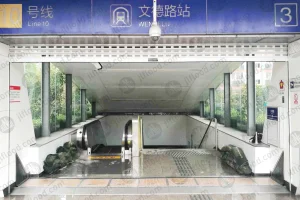
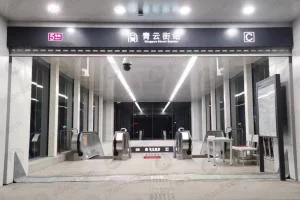
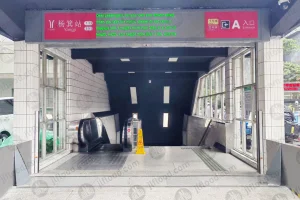
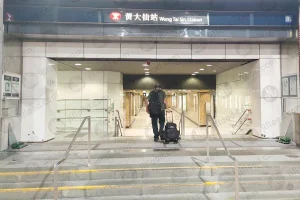
Subway station entrances, pedestrian concourses, and ventilation shafts are prime ingress routes for flash floods. Embedded surface-type self-closing flood gates sit flush with station paving, instantly deploying when water overleaps urban curb capacities to protect millions of dollars in rail transit signaling equipment.
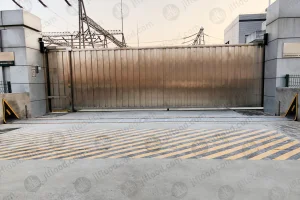
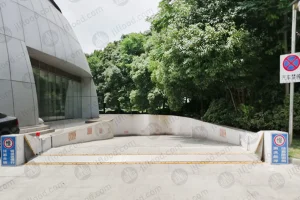
Power utilities require zero-downtime flood defense. Substation gate flood barriers prevent water intrusion into high-voltage switchgear rooms, transformer vaults, and underground cable trenches. Passive operation guarantees continuous protection even during regional blackout events.
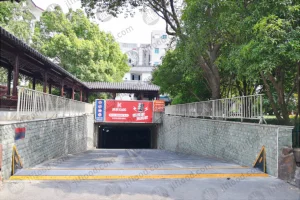
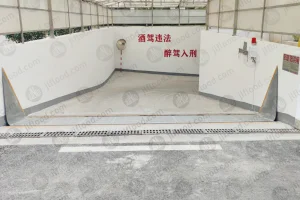
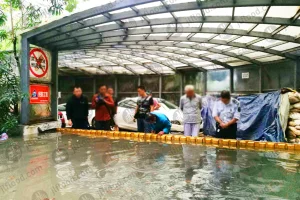
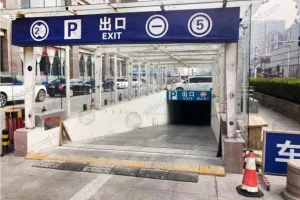
Commercial basements and multi-story underground car parks are highly susceptible to severe financial losses from submerged vehicles and building services. Driveway-installed self-closing barriers maintain high vehicle roll-over capacity while offering seamless passive defense against urban waterlogging.
A comprehensive engineering comparison of active, manual, and hydrodynamic flood mitigation technologies.
| Evaluation Parameter | Hydrodynamic Self-Closing Barrier | Motorized Electric Flip-Up Gate | Manual Aluminum Stop-Logs | Inflatable / Sandbag Systems |
|---|---|---|---|---|
| Power Dependence | Zero (100% Passive) | High (Requires Mains / Backup) | Zero | Requires Air Compressors / Water Pumps |
| Activation Latency | Instantaneous (< 0.1 sec) | 30 - 90 Seconds | 30 - 120 Minutes (Manual Labor) | 1 - 4 Hours |
| Human Reliability Risk | Zero Risk (Fully Automatic) | Moderate (Operator / Sensor Dependent) | Extreme Risk (Staff Required On-Site) | Extreme Risk (Labor Intensive) |
| Vehicle Rollover Load | Up to 60+ Tons (AASHTO HS-20) | 15 - 30 Tons Max | N/A (Blocks Traffic Completely) | N/A (No Vehicle Passage) |
| Maintenance Profile | Minimal (Annual Debris Flush) | High (Motors, Sensors, Hydraulics) | Moderate (Storage & Gasket Checks) | High (Material Degradation) |
| 20-Year Total Cost of Ownership | Lowest (Zero Electricity / Low O&M) | Very High (Power & Repairs) | High (Labor Costs During Alarms) | High (Frequent Replacement) |
Explore factory-direct self-closing, flip-up, and embedded automatic flood barrier equipment configured for immediate international dispatch.

Essential technical benchmarks for municipal tendering committees, EPC contractors, and global equipment importers.
Procuring industrial self-closing flood barrier systems requires rigorous evaluation of both factory quality management systems and physical product engineering. Below is the standard engineering tender verification matrix utilized by international civil engineering specifiers:
Verify that the manufacturer provides third-party verified pool test reports or factory acceptance test (FAT) video proof demonstrating an allowable leakage rate of under 0.2 Liters/Hour per meter of seal under full static head.
Ensure structural engineering documentation specifies maximum mid-span panel deflection limits of less than L/250 under maximum design flood height to prevent gasket separation under hydro-dynamic wave action.
Supplier must issue detailed civil engineering interface drawings, embedment trough concrete pouring schedules, rebar clearance schematics, and localized drainage connection details prior to equipment shipment.
Expert answers to common engineering, installation, and procurement queries regarding hydrodynamic passive flood control gates.
The barrier is installed flush within a ground-level foundation chamber. When floodwater reaches the entrance, water automatically fills the bottom containment trough through intake grates. The buoyant core inside the aluminum panel causes the barrier to pivot upward automatically. As water rises, hydrostatic pressure pushes the panel firmly against the side frames, creating a tight seal using EPDM rubber gaskets without requiring electricity, pumps, or manual assistance.
Under dry ambient conditions, the barrier rests flush inside its high-strength stainless steel foundation frame. The structural panel is constructed from heavy-duty 6063-T6 aluminum extrusion reinforced with structural load ribs, engineered to withstand axle rollover weights exceeding 40 to 60 tons (AASHTO HS-20 / Eurocode standards). Heavy vehicles can drive directly over the barrier without causing structural deformation or seal damage.
Junli self-closing barriers feature integrated sediment flushing Conduits and a dedicated debris collection channel within the foundation trough. Normal rain wash flows through bottom drainage outlets connected to site storm drains. During severe flood events, the initial water surge lifts the panel before heavy sediment settles. Periodic routine maintenance involves a simple pressure-washer flush of the foundation trough using built-in cleanout ports.
Yes. For cold climate installations, Chinese factories equip the foundation trough with self-regulating electric heating cables (trace heating) embedded alongside the base frame. This low-wattage system keeps the sump trough and seal contact faces clear of ice, ensuring immediate hydrodynamic deployment during winter thaw floods or freezing rain events.
Standard single-leaf panels accommodate retaining heights from 0.5m to 2.0m. For wide openings such as multi-lane parking ramps or wide subway entrances, modular panel units are linked seamlessly using intermediary stainless steel support mullions, enabling continuous horizontal protection across spans exceeding 50+ meters.
With anodized 6063-T6 aluminum alloy panels and SUS304/SUS316 stainless steel troughs, the metallic structure boasts a design life of over 25 to 30 years. The primary EPDM seals have an operational life of 10 to 15 years depending on local UV exposure, and are designed as modular press-fit strips for fast on-site replacement without removing the main barrier panels.


