Explore our primary factory-direct self-closing flood gates engineered for commercial underground parking ramps, metro access points, and power substations.
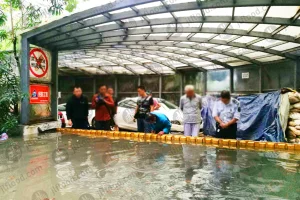
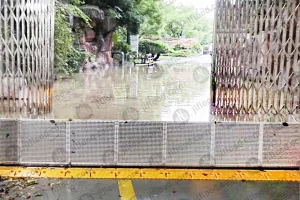
Urban infrastructure across the globe faces an unprecedented increase in extreme hydro-meteorological events. According to the Intergovernmental Panel on Climate Change (IPCC) Sixth Assessment Report, cloudburst events and high-intensity short-duration rainfall (pluvial flooding) have surged by over 38% in metropolitan areas globally. Underground parking garages, commercial basements, transit tunnels, and low-lying industrial facilities represent the most structurally vulnerable points during sudden flash floods. A single breach of an underground garage entrance can result in catastrophic financial damages—destroying high-value vehicular assets, mechanical/electrical plant rooms, switchgears, and causing structural building compromise costing millions of dollars in downtime and emergency remediation.
The engineering paradigm has decisively shifted toward hydrodynamic self-closing flood barriers (SCFBs). Designed to sit flush with the road surface under normal traffic conditions, these systems utilize the physical principles of hydrostatics and buoyancy to deploy automatically when surface runoff reaches critical water levels. By requiring zero human activation, zero electrical power, and zero sensor network dependencies, self-closing garage flood barriers provide 24/7 unyielding protection against urban waterlogging.
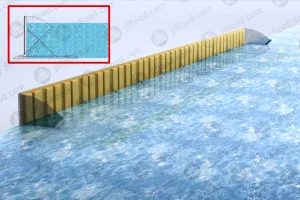
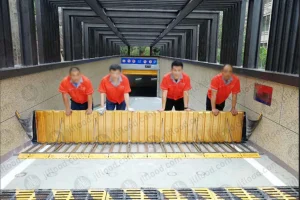
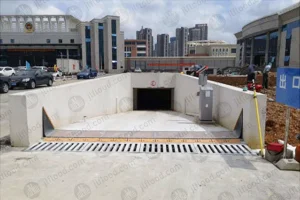
The engineering design of a wholesale self-closing flood barrier for garage applications relies on Archimedes' principle of buoyancy coupled with hydrostatic pressure mechanics. The assembly consists of three core engineering sub-systems: the ground embedded basin (drive-over foundation channel), the buoyancy-optimized flood wall door leaf, and the dual-lip perimeter compression seal system.
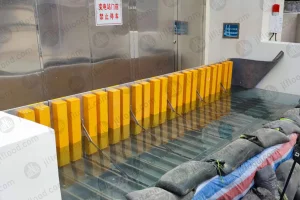
When severe surface water runoff reaches the threshold kerb level, water naturally enters the collection grates of the subterranean foundation basin. As the water level inside the basin rises, it displaces air and exerts upward hydraulic buoyancy on the floating panel assembly.
The internal core of the barrier panel is constructed using high-density closed-cell structural polyurethane foam clad in marine-grade stainless steel or structural aluminum alloy. The precise density gradient creates immediate positive buoyancy, causing the panel to pivot on heavy-duty stainless steel hinge arrays.
As floodwaters continue to rise outside the barrier, the hydrostatic pressure head acts directly against the vertical face of the panel. This external water force presses the high-grade EPDM double-lip seals tightly against the side abutment frame, forming an impenetrable watertight lock (IP68 rating).
When evaluating wholesale self-closing flood barrier suppliers, engineering procurement teams must analyze material yields, dynamic deflection ratios, and anti-corrosion properties under heavy vehicular impact loadings. Below is the technical specification baseline for factory manufacturing:
| Engineering Parameter | Standard Commercial Grade | Heavy-Duty Industrial Grade (Junli Benchmark) | Infrastructure / Metro Grade |
|---|---|---|---|
| Primary Panel Material | Aluminum Alloy 6063-T5 | Stainless Steel SUS304 / Structural Al 6061-T6 | Austenitic Stainless Steel SUS316L |
| Load Rating (EN 124) | Class C250 (25 Ton Axle) | Class D400 (40 Ton Heavy Truck) | Class E600 / F900 (60-90 Ton Extreme Load) |
| Sealing Polymer | Standard Neoprene Rubber | EPDM Dual-Lip vulcanized compound | Fluorocarbon / Silicone High-Density EPDM |
| Max Retaining Height | 500 mm – 900 mm | 600 mm – 1500 mm | 1000 mm – 2000 mm+ (Modular Arrays) |
| Corrosion Resistance | Powder Coated Finish | Hot-Dip Galvanized + Fluorocarbon Coating | Passivated Electro-polished 316L + Anodized |
| Water Leakage Rate | < 0.5 L/hr per meter | < 0.05 L/hr per meter (Near Zero) | 0.00 L/hr per meter (Tested 72hr Pool Test) |
Sourcing wholesale garage self-closing flood barriers requires an acute understanding of international regulatory frameworks and localized municipal flood codes. Real estate developers, civil contractors, and municipal planning authorities must specify barriers that conform to rigorous testing regimes:
In the United States and Canada, flood mitigation products specified for commercial garage ramps must align with Federal Emergency Management Agency (FEMA) Technical Bulletin P-936 guidelines for Dry Floodproofing. Testing under FM 2510 mandates dynamic wave impact resistance, hydrodynamic force resistance, and maximum allowable leakage limits of less than 0.25 gal/hr per linear foot of wetted perimeter.
Across the European Union and UK markets, automatic flood barriers are subjected to rigorous structural design standards under Eurocode 2 (Structural Concrete Design for Retention Basin Channels) and BS EN 13564 for anti-flooding devices. Barriers must withstand structural impact from floating debris (hydrodynamic debris loading calculated at 1.5 m/s velocity).
In East Asian coastal metropolitan regions (such as China, Hong Kong, Singapore, and Japan), flood protection gates are integrated into urban sponge city initiatives. Under Chinese Standard GB 50014 (Outdoor Drainage Design Standard), underground car parks are required to install continuous, high-efficiency automatic barriers capable of holding back 1-in-100-year rainstorm surges.
Self-closing flood barriers are engineered for seamless integration across diverse urban and industrial civil geometries. Below are the primary deployment blueprints:
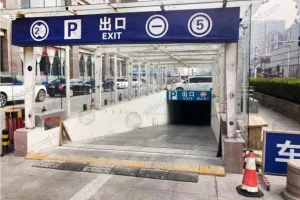
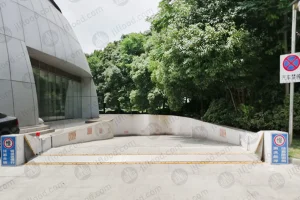
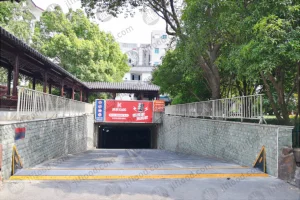
Installed directly at the threshold of the slope ramp before the property boundary. The top plate lies 100% flush with the asphalt or concrete drive surface, ensuring smooth transit for low-clearance passenger cars, sports vehicles, and heavy delivery trucks without creating a speed bump hindrance.
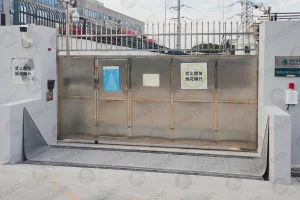
Electrical utility substations require continuous protection against water ingress which can trigger explosive short circuits and regional blackouts. Self-closing barriers installed around perimeter gates provide autonomous protection, safeguarding critical national infrastructure without requiring utility staff intervention during emergencies.
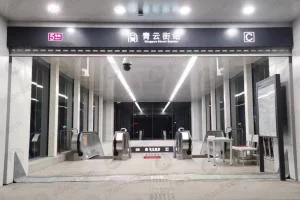
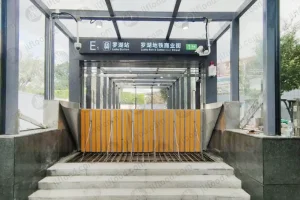
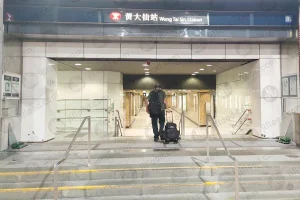
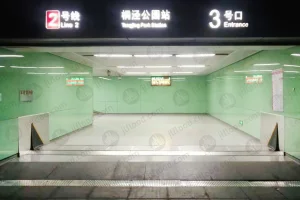
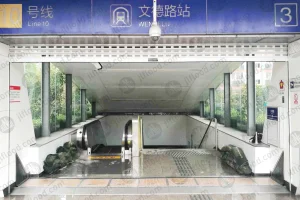
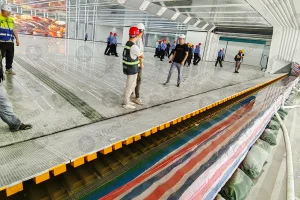
Subway transit networks present complex civil interfaces. Modular surface-type and recessed hydrodynamic flood barriers are installed at station entrances and connection channels linking retail malls to transit hubs, forming a reliable defense matrix against catastrophic tunnel inundation.
Procurement managers and B2B buyers must evaluate total cost of ownership (TCO) rather than just initial purchase price. Wholesale pricing for self-closing garage flood barriers is primarily calculated on a per linear meter ($/m) basis, modified by clear span width, retaining height, axle loading class, and customization specifications.
| Product Model Family | Retaining Height Range | Axle Load Class | Estimated Wholesale Price (USD / Meter) | MOQ & Lead Time |
|---|---|---|---|---|
| Surface-Mounted Flip-Up Barrier | 300 mm – 600 mm | 15 – 25 Tons | $350 – $580 / m | 5 Meters | 10-15 Days |
| Embedded Hydrodynamic Barrier (Hm4d-0006C Series) | 600 mm – 1000 mm | 40 Tons Heavy Duty | $650 – $980 / m | 3 Meters | 15-20 Days |
| High-Water Modular Barrier (Hm4d-0006D Series) | 1000 mm – 1500 mm | 50 Tons Truck Rated | $950 – $1,450 / m | 3 Meters | 20-25 Days |
| Metro / Substation Heavy Armor Grade (SUS316L) | 1200 mm – 2000 mm+ | 60+ Tons Extreme | $1,350 – $2,200 / m | Custom | 25-30 Days |
As smart city IoT infrastructure matures, the self-closing flood barrier is undergoing a technological renaissance. While maintaining its purely mechanical passive hydrodynamic reliability, modern innovations integrate hybrid monitoring technologies to provide facility managers with real-time site intelligence:
Next-generation barrier frames are fitted with non-contact ultrasonic water level sensors and wireless LoRaWAN / NB-IoT transmitters. When the panel begins rising due to water inflow, an automated alert signal is dispatched to the building management system (BMS) and mobile apps, closing garage security gates and halting vehicle entry remotely.
Collaborating with materials research labs, Junli is integrating self-healing elastomeric seals containing micro-encapsulating waterproofing agents. Minor seal surface abrasions caused by gravel or road debris automatically swell and seal upon contact with water, ensuring zero leakage performance even under harsh road grit exposure.
Using advanced Finite Element Analysis (FEA) and Computational Fluid Dynamics (CFD), structural ribs inside barrier leaves are optimized for maximum strength-to-weight ratios. This enables 30% lighter barrier panels with elevated structural stiffness, capable of surviving hydrodynamic shock waves generated by passing rescue vehicles.
Select from our specialized line of hydrodynamic gates engineered for metro entrances, power grid assets, and modular civil protection projects.