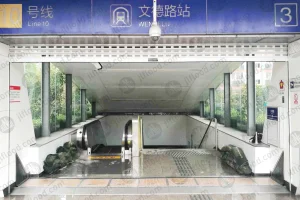
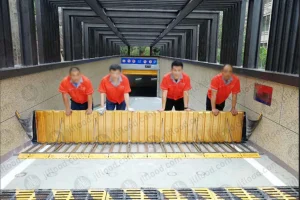
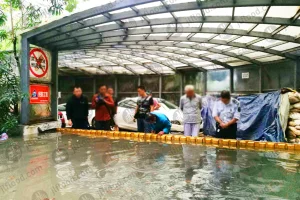
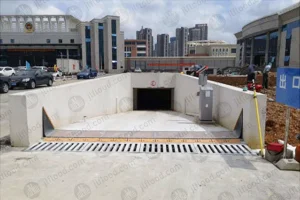
Factory-Direct Wholesale Solutions Engineered for Underground Metro Entrances, Electrical Substations, and Commercial Facilities
Moving Beyond Failed Manual Sandbags and Vulnerable Electromechanical Barrier Systems
Modern climate extremes frequently disrupt electrical grids right when flash floods occur. Self-closing flood control devices operate entirely on hydrodynamic water buoyancy, deploying automatically without human intervention or backup generators.
When floodwaters enter the embedded foundation pit, buoyancy forces trigger the barrier panel within seconds. This rapid passive reaction eliminates catastrophic delays caused by transit traffic locks or late night facility staffing shortages.
Manufactured from high-strength anodized 6063-T6 aluminum alloy and 304/316 stainless steel, these systems withstand heavy vehicle drive-over traffic loads while resisting marine and urban environmental corrosion for decades.
Hydrostatic Equilibrium, Mechanical Leverage, and Elastomeric Sealing Integrity
The core mechanism consists of three integrated structural components: a flush-mounted ground basin (embedded frame), a high-buoyancy articulated door panel, and a multi-stage EPDM rubber sealing gasket matrix.
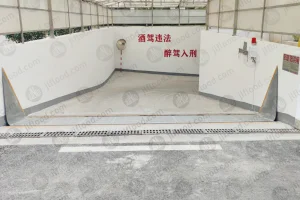
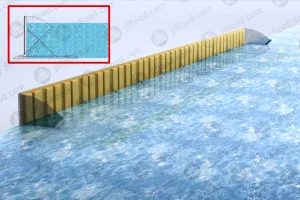
Under dry conditions, the top plate sits completely level with the surrounding pavement, allowing unhindered pedestrian movement and heavy vehicular ingress/egress (up to 40-ton axle loads). When flash flooding triggers surface runoff water to overflow into the intake grill of the foundation basin, the following physics take effect:
Standard Retaining Height: 500mm – 2000mm
Modular Clear Span Width: Unlimited (Custom modular interconnects)
Response Time: Passive (0.1m water level trigger)
Structural Material: 6063-T6 Structural Aluminum / SUS304 Frame
Sealing Material: Aging-Resistant Triple-Lip EPDM Compound
Load Rating: AASHTO HS20 / EN 124 D400 (40 Ton vehicular transit)
Leakage Rate: < 0.15 L/h per meter of seal (Exceeds international standards)
Why Municipal Project Directors, B2B Wholesalers & EPC Contractors Partner with Our Manufacturing Hub
Unlike active hydraulic or electromechanical barriers that demand periodic motor maintenance, electrical inspection, battery replacements, and standby power expenditures, self-closing flood gates have zero operational energy costs and minimal annual routine inspection requirements.
Designed to lay flush with asphalt, concrete, or stone pavers. The surface aesthetic preserves building facade integrity while ensuring compliance with ADA accessibility and trip-hazard municipal regulations.
As a direct OEM/ODM manufacturer in Nanjing, China, we support global distributors, engineers, and contractors with volume pricing tier pricing, direct CAD/BIM drawing customization, and full commercial export compliance.
Tailored Hydrodynamic Flood Defense Engineered for High-Risk Physical Infrastructure
| Application Scenario | Primary Threat Vector | Recommended Barrier System | Key Performance Standard |
|---|---|---|---|
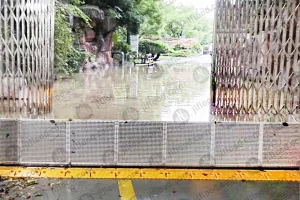
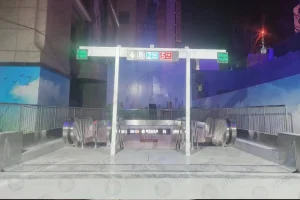
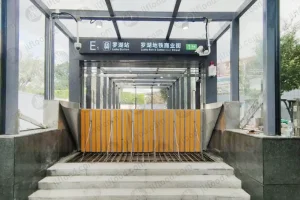
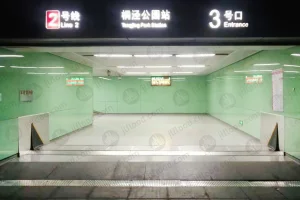
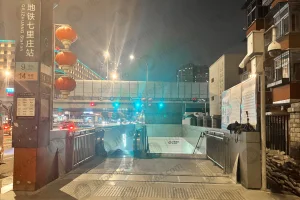
| Metro Transit & Subway Stations | Rapid water ingress into pedestrian access stairs and ventilation shafts | Embedded Hydrodynamic Self-Closing Metro Gate (HM4D Series) | Sub-second passive deployment, zero reliance on grid power during typhoons |
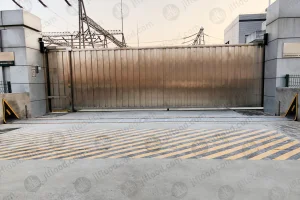
| Power Substations & Grid Assets | Transformer pit short-circuiting and localized equipment room inundation | Substation Perimeter Gate & Self-Closing Cable Trench Barrier | Dielectric isolation compatibility, 100% water-tight perimeter seal |
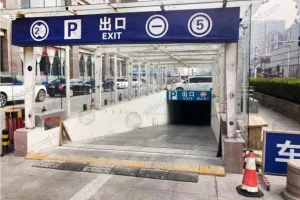
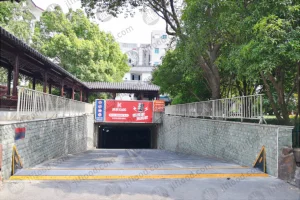
| Commercial & Hospital Garages | Ramp runoff flooding subterranean vehicular parking and M&E plant rooms | Heavy-Duty Surface / Embedded Drive-Over Ramp Barriers | 40-ton vehicle load support, multi-leaf modular extension up to 30m+ |
| Underground Connection Channels | Flash flood overflow between adjacent subterranean commercial complexes | Modular Interconnected Hydrodynamic Barrier Array | Continuous zero-leakage elastomeric edge seals, minimal civil excavation profile |
Verifiable E-E-A-T Quality Assurance Built Into Every Production Batch
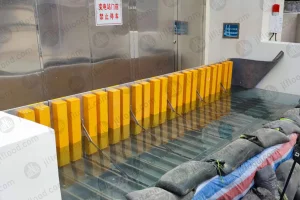
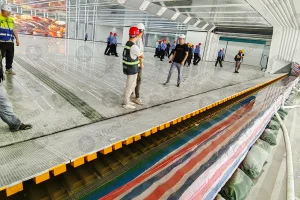
Every custom engineered unit undergoes static head hydrostatic water testing within our specialized test pool facility in Nanjing prior to dispatch. Pre-delivery video documentation and third-party inspection reports (SGS/TÜV/BV) can be provided upon project requirement.
We supply local EPC contractors and civil designers with comprehensive concrete pit rebar detail drawings, embedded frame mounting templates, drainage connection notes, and BIM-compatible Revit objects to streamline tender submittals.
Structural modules are packed in ISPM-15 compliant fumigated wooden crates with moisture barrier wrapping and steel-band reinforced edges, ensuring safe international ocean freight transport to North America, Europe, SE Asia, and the Middle East.
Integrating IoT Telemetry, Advanced Composites, and Smart City Digital Twin Monitoring
While activation remains 100% mechanical and power-free, next-generation Junli barriers incorporate low-power LoRaWAN and NB-IoT water level sensors to instantly transmit gate status notifications to municipal emergency command centers when a passive deployment occurs.
Ongoing material development focuses on carbon-reinforced aluminum matrix alloys and ceramic-fluorocarbon anti-corrosion coatings to extend maintenance-free deployment windows in high-salinity coastal storm-surge environments.
Full parametric 3D CAD/BIM object libraries are provided for architectural specifiers, allowing precise virtual clash-detection and structural integration during the preliminary building design phase.
Explore Specialized Models for Rail Transit, Electrical Infrastructure, and Underground Basements
Everything Procurement Managers & Consulting Engineers Need to Know About Purchasing, Installation & Performance
Our hydrodynamic automatic flood barriers are engineered to be 100% independent of electricity, sensors, motors, or human operator intervention. The lifting action is powered solely by fluid mechanics: rising surface floodwaters naturally flow into the embedded foundation pit, generating hydrostatic uplift force and buoyancy that raises the articulated door panel. The higher the floodwater rises, the tighter the hydraulic pressure forces the elastomeric seal against the frame.
Embedded-type barriers require a shallow pre-cast or cast-in-place concrete foundation trench so that the top cover plate rests completely flush with the surrounding finished ground level—ideal for high-traffic metro station entrances and commercial parking ramps. Surface-mounted barriers are retrofitted directly onto existing flat concrete slabs using chemical anchor bolts, offering a lower civil work requirement for existing facilities, equipment doorways, and power substations.
Standard heavy-duty garage models (such as the HM4D-0006C series) are constructed from high-tensile 6063-T6 extruded structural aluminum alloys reinforced with internal load-bearing ribs. They are tested to sustain wheel axle loads up to 40 metric tons (conforming to AASHTO HS20 and EN 124 D400 standards), allowing fire engines, heavy delivery trucks, and dense passenger vehicle traffic to drive over them daily without structural deformation.
The sealing architecture utilizes custom-extruded, high-resilience EPDM (Ethylene Propylene Diene Monomer) or NBR rubber profiles featuring a multi-lip dynamic sealing geometry. As the barrier panel rotates into its vertical retaining position, double side seals press against stainless steel side jambs. Hydrostatic pressure behind the gate plate creates an active compression effect, resulting in a verified leakage rate under 0.15 Liters/hour per meter of seal length—far surpassing standard civil engineering flood thresholds.
Because the passive system eliminates motors, electrical wiring, and hydraulic oil lines, routine maintenance is remarkably straightforward. We recommend a semi-annual inspection consisting of: 1) Clearing accumulated leaves or debris from the bottom foundation catch basin; 2) Rinsing internal drainage outlets with a water hose; and 3) Visually inspecting the rubber seals for physical damage or wear. Replacement seal kits can be installed on-site in under an hour without specialized machinery.
Standard factory single-leaf module spans range up to 6.0 meters, with retaining heights available from 500mm up to 2000mm. For wider openings such as multi-lane parking ramps or expansive metro station concourses (over 20 meters wide), multiple barrier modules are interconnected using modular intermediate support posts or synchronized linkage joints to create an uninterrupted flood wall.
As an established OEM manufacturer based in Nanjing, China, our standard manufacturing lead time is 15 to 25 business days depending on order volume and custom dimension requirements. We offer FOB, CIF, DDP, and DAP terms to global sea ports and job sites worldwide, complete with certified fumigated wood packaging, English installation manuals, CAD shop drawings, and remote engineering video support.