Explore our field-tested, hydrodynamic automatic flood barriers engineered for zero-energy operation during flash floods. Designed for rapid installation across transit systems, utility vaults, and subterranean garages.
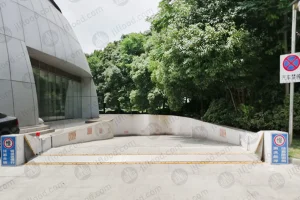
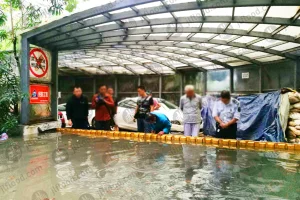
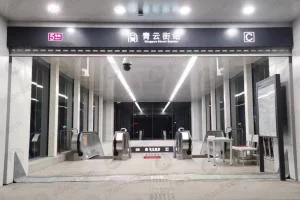
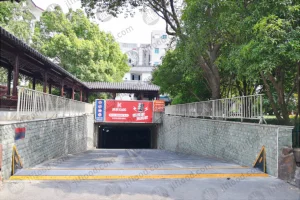
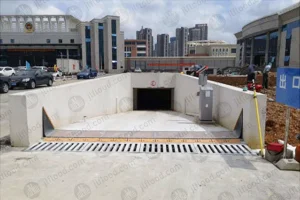

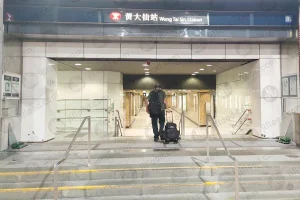
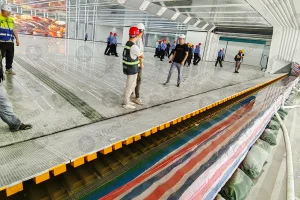
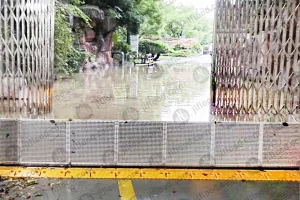
Urban waterlogging and sudden cloudburst events present catastrophic risks to subterranean infrastructure. Traditional manual barrier deployment (such as aluminum stop logs or sandbags) frequently fails due to rapid water inundation, human error, or lack of early warning. Electrical automated barriers often become inoperable when municipal power grids collapse during severe storms.
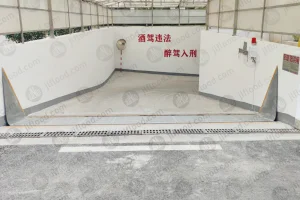
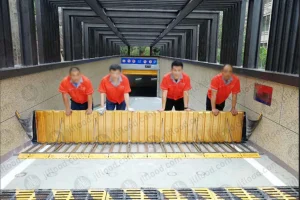
The Self-Closing Hydrodynamic Flood Gate overcomes these vulnerabilities through a pure mechanical-hydraulic mechanism based on Archimedes’ principle of buoyancy. Embedded seamlessly within the ground slab at building perimeters, metro entrances, or underground garage ramps, the barrier remains completely flush with the pavement surface during dry conditions, supporting heavy vehicular traffic (up to 60-ton axle loads).
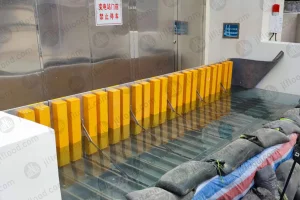
As floodwater reaches the threshold, water flows into the bottom recessed concrete chamber through intake grates. No electrical sensors, motors, or manual operators are required.
The high-density closed-cell poly-structural core inside the stainless steel or marine-grade aluminum panel creates upward hydrodynamic force, elevating the panel as water levels rise.
As the panel reaches its maximum operational angle (typically 75° to 90°), hydrostatic head pressure pushes the primary EPDM triple-contour seal against the side frames, creating a hermetic seal.
When evaluating Wholesale Self-Closing Flood Barrier Pricelists, engineering procurement managers must assess total cost of ownership (TCO) rather than unit FOB price alone. Factory-direct pricing varies significantly based on structural load ratings, depth of embedment, metallurgy, and custom clear-span configurations.
| Model Category | Retaining Height | Structural Load Rating | Material Specification | Est. Wholesale Price Range (USD/m) | Primary Application |
|---|---|---|---|---|---|
| Hm4d-0006D Series | 500mm - 900mm | Pass. Vehicle (3.5T - 10T) | Al6063-T6 / EPDM / SS304 | $450 - $780 / meter | Residential Garages, Commercial Plazas |
| Hm4e-006C Embedded | 600mm - 1200mm | Heavy Duty (30T - 45T) | SS304 Frame / Al-Alloy Panel | $750 - $1,250 / meter | Metro Station Entrances, Logistics Hubs |
| Substation Heavy Duty | 800mm - 1500mm | Extreme Load (50T - 60T) | 316 Stainless / Reinforced Steel | $1,100 - $1,850 / meter | Electrical Substations, Nuclear Assets |
| Flip-Up Automatic Gate | 400mm - 1000mm | Pedestrian / Light Utility | Anodized Structural Aluminum | $380 - $650 / meter | Equipment Room Doors, Pedestrian Entrances |
1. Clear Width & Modular Splicing: Single-span barriers without intermediate posts command higher engineering precision. Spans exceeding 6 meters utilize inter-locking modular panel connectors with dual-bladder inflatable or self-actuating side seals.
2. Metallurgy & Anti-Corrosion Coating: Standard units utilize anodized structural aluminum grade 6063-T6 with SS304 embedment frames. Coastal saline environments require SS316 frame components and Fluorocarbon (PVDF) sprayed panels.
While passive self-closing systems carry a slightly higher initial hardware cost (+15-20%) compared to electromechanical gates, they eliminate 100% of emergency generator integration costs, electrical wiring, yearly motor servicing, and human standby labor, delivering a 40% lower 10-year TCO.
China has established itself as the global epicenter for advanced hydraulic infrastructure manufacturing. Utilizing integrated regional industrial clusters—combining high-precision aluminum extrusion mills, robotic laser-welding plants, and certified polymer seal laboratories—Chinese manufacturers provide unmatched quality control at scale.
Direct sourcing from tier-1 aluminum smelters guarantees tensile strength ≥205 MPa and yield strength ≥110 MPa for heavy load ramps.
Robotic TIG/MIG seam welding eliminates structural void points, guaranteeing zero leakage inside the internal buoyancy chamber panel.
Every batch undergoes full-scale static head water testing up to 2.0 meters of pressure to measure seal deflection prior to export packaging.
Complete BIM/CAD integration support for engineering design firms, including custom trench depth profiles and concrete embedment drawings.
For global EPC contractors and commercial developers, regulatory compliance is non-negotiable. Self-closing flood gates must comply with stringent international standards regarding hydrostatic load, impact resistance, and egress safety.
Barriers are calculated to withstand dynamic wave impact forces according to FEMA P-936 (Floodproofing Non-Residential Structures) and BS EN 1991-1-6 (Actions on Structures during Execution). Structural deflection is governed to less than L/250 under maximum flood head.
When recessed, top frame plates feature anti-slip textured pattern design (R11 skid resistance rated under DIN 51130). Optional warning lights, audible alarms, and mechanical dampers regulate closure speed to prevent accidental entrapment.
Manufactured under ISO 9001:2015 Quality Management Systems, ISO 14001 Environmental Standard, and CE Mark (EN 1090-1 execution of steel and aluminum structures), ensuring rapid customs clearance for EU, North American, and Middle Eastern destinations.
Different urban micro-environments present unique structural challenges. Custom modular engineering adapts the underlying tray, drainage connection, and edge seals to specific civil conditions.
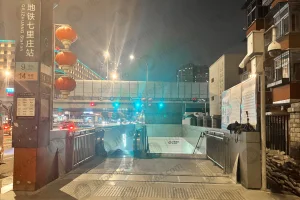
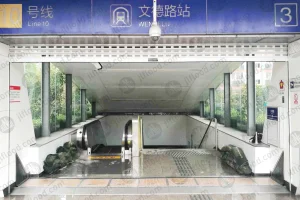
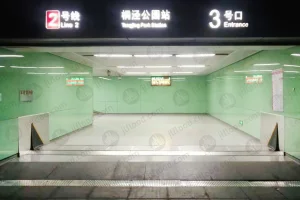
Subway station entrances represent high-risk flood paths. Embedded hydrodynamic barriers are integrated at the first step or plaza transition. In cities like Guangzhou, Dalian, and Shenzhen, thousands of passenger portals are protected by passive self-closing barriers connected directly to municipal storm drains.
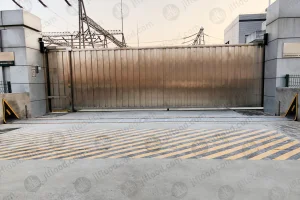
Water ingress into electrical transformer rooms leads to catastrophic power blackouts and millions in equipment loss. Substation gates require 100% water tightness with zero electrical dependency, utilizing oil-resistant NBR or EPDM gasket profiles.
Basement parking ramps in shopping malls and commercial complexes experience intense traffic load. Heavy-duty self-closing flood gates embed directly into the ramp slope or base, ensuring smooth daily driving while preventing ramp inundation.
Beyond flood defense, self-actuating barriers are utilized in reverse mode as containment barriers for industrial firewater or chemical spill retention, automatically trapping contaminated runoff inside plant boundaries.
As climate change accelerates extreme weather events (100-year storm frequencies occurring within decades), urban flood control is moving toward passive-active hybrid smart networks.
Modern self-closing gates are fitted with low-power wireless NB-IoT / LoRaWAN sensors that transmit real-time panel elevation status, water level data, and maintenance alerts directly to central Smart City control centers.
While mechanical buoyancy remains the primary deployment force, secondary electromagnetic holding latches prevent panel deployment during non-flood surface cleaning or enable remote locking for security anti-terrorism protocols.
Next-generation barrier designs focus on shallow trench depth (less than 150mm), allowing rapid structural retrofit into existing concrete ramps without severing underlying structural rebar networks.
The system operates purely through buoyancy and hydrostatic pressure. When flood water enters the recessed bottom frame box, the engineered light-weight structural core generates upward lift forces, causing the gate panel to pivot upwards automatically. As water rises, water head pressure seals the panel tightly against side jambs.
Yes. Our heavy-duty series (e.g., Hm4d-0006C and Substation models) are engineered with high-tensile structural steel or reinforced T6 aluminum top covers certified for axle loads up to 45T - 60T (AASHTO HS-20 / Eurocode load ratings).
The bottom frame includes integrated debris filtration channels and bottom drain outlets connected to the site’s storm drain network. Annual routine inspection involves opening the top access panel to flush out silt with a standard high-pressure water hose.
The metallic panel and frame have an engineered design life exceeding 25-30 years. The primary EPDM seal gaskets are UV-stabilized and chemical-resistant, with a operational lifespan of 10-15 years. Seals can be replaced rapidly on-site without removing the structural frame.
For cold-climate installations (such as Northern Europe, Canada, or Northern China), embedded electric trace heating cables are integrated into the bottom frame tray to maintain temperatures above 3°C, preventing ice formation in winter conditions.
Standard manufacturing lead time is 15-25 days depending on total linear meter quantity and customization requirements. We offer FOB, CIF, DDP, and DAP terms with export-compliant wooden crate packaging.
Review our full range of embedded, surface-mounted, and station-grade hydrodynamic automatic flood barriers. Contact our engineering desk for custom CAD drawings and wholesale quote requests.