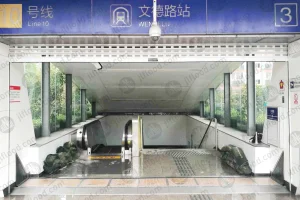
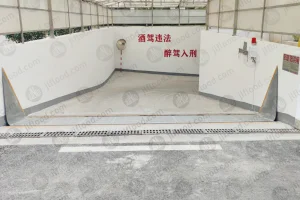
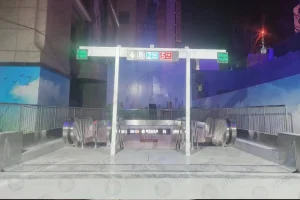
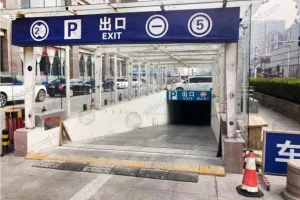
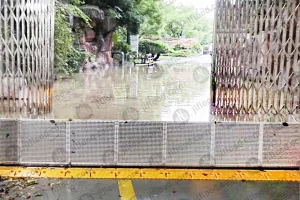
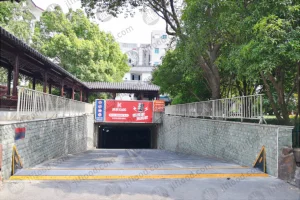
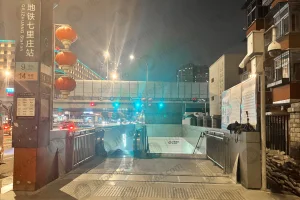
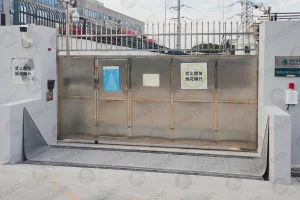
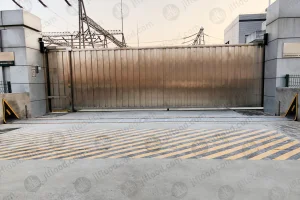
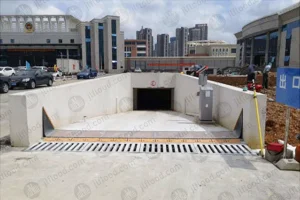
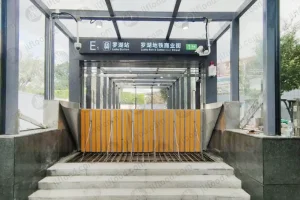
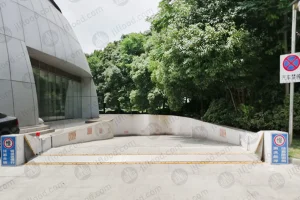
As climate-induced extreme precipitation events accelerate globally, urban rail transit networks, subways, and subterranean civil infrastructure face catastrophic inundation risks. Nanjing Junli Technology Co., Ltd. engineers state-of-the-art hydrodynamic passive self-closing flood gates designed to deploy automatically without grid power, human operator intervention, or electronic sensor reliance.
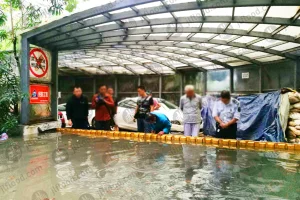
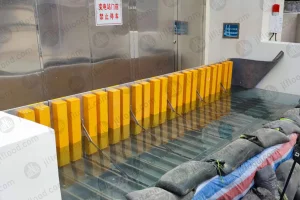
Our self-closing flood gate operates on fundamental hydrostatics. Built into a recessed embedded trench flush with ground level, the door panel remains completely hidden under normal pedestrian traffic. When floodwaters enter the retention basin, buoyancy forces combined with rising hydrostatic pressure automatically lift the gate panel to block water ingress in seconds.
Historical urban floods consistently induce electrical grid failures. By eliminating electric motors, pumps, pneumatic lines, and complex digital sensors, Junli’s hydrodynamic flood barriers ensure 100% mechanical reliability precisely when power infrastructure suffers complete blackout.
Engineered with high-tensile structural stainless steel (SUS304/SUS316) and marine-grade aluminum alloy, our entry gates easily absorb severe hydrodynamic waves, heavy debris impacts, and high point loads (compliant with EN 124 D400 / AASHTO HS-20 standards for vehicle crossing).
The future of subterranean water barrier engineering demands a convergence of material science, hydrodynamic fluid modeling, micro-sensor telematics, and urban resilience design.
Our ongoing material science research focuses on dual-durometer vulcanized EPDM seals engineered to maintain continuous elasticity across continuous thermal cycles (-40°C to +90°C), resisting chemical oxidation, road salt degradation, and high hydrostatic friction over a 30-year operational lifecycle.
While activation remains purely passive and mechanical, our modern gates embed ultra-low-power LoRaWAN and NB-IoT telemetry modules. Facilities managers receive instantaneous real-time alerts regarding gate deployment position, basin water levels, and structural status directly to central SCADA systems.
Urban floodwaters carry high volumes of mud, sand, and urban silt. Future-proof Junli modular designs incorporate self-flushing hydrodynamic channels that utilize initial water velocity to sweep debris clear of the hinge geometry, ensuring non-jamming closure during extreme inundation.
Subway networks feature complex multi-level underground architectures. A single unshielded entryway or cable duct can compromise an entire transit line, resulting in catastrophic loss of life and billions in asset damage.
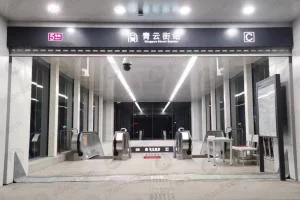
Installed seamlessly at ground-level stairwell heads or concourse access plazas. Embedded flush mounted to permit unrestricted passenger traffic flow until water triggers automatic panel elevation.
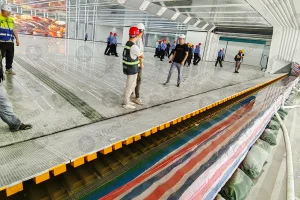
Underground commercial corridors connecting subways to shopping centers or high-speed rail hubs require wide-span modular flood gates that isolate flooded zones without structural modification.
Sub-surface subway ventilation shafts are major vulnerabilities during flash floods. Surface-mounted hydrodynamic barriers seal ambient air shafts instantly upon flash flood contact.
Electrical equipment rooms and traction substations require zero-tolerance water isolation. High-head retaining barriers shield critical transformer vaults from flash inundation.
Headquartered in Qinhuai District, Nanjing, Jiangsu Province, Nanjing Junli Technology Co., Ltd. operates a high-tech manufacturing base engineered to deliver institutional-grade infrastructure hardware worldwide.
Our facilities utilize multi-axis CNC fiber laser cutting systems and automated robotic welding cells to guarantee tight tolerances across stainless steel structural profiles, eliminating weld distortion and ensuring seal integrity under extreme pressure heads.
Unlike trading entities, Junli maintains an in-house full-scale hydraulic testing basin. Every custom modular configuration undergoes simulated static water head pressure testing, rapid activation verification, and dynamic deflection testing prior to shipping.
By leveraging China's robust industrial ecosystem and raw material integration, Junli provides OEM contractors, engineering consultants, and municipal authorities with high-performance wholesale flood gates at competitive prices.
When specifying self-closing flood gates for high-density transit networks, procurement managers and lead civil engineers must evaluate technical variables beyond basic door width.
Determine maximum historic inundation depth plus safety freeboard. Standard Junli units span 0.5m to 2.0m retaining heights per leaf, customizable for extreme storm surge requirements.
New subway builds benefit from embedded foundation chambers flush with finished floor levels. Retrofit projects can specify shallow surface-mounted or flip-up configurations to minimize concrete excavation.
For wide entryway thresholds exceeding 6 meters, Junli manufactures interlocking multi-leaf hydrodynamic arrays with removable intermediate mullions for unlimited clear span coverage.
Junli Technology partners with international EPC contractors, architects, and municipal transport agencies, providing full engineering documentation, BIM models, structural calculations, and localized support.
Manufactured under ISO 9001 quality systems, complying with international flood barrier testing directives (including equivalent FM 2510, ASTM F3057 criteria, and EN standards).
We supply complete AutoDesk Revit BIM models, DWG CAD embedded frame details, structural load calculations, and concrete reinforcement specification sheets for seamless tender inclusion.
All wholesale orders are packaged in ISPM 15 compliant ocean export wooden cases, complete with factory acceptance test (FAT) reports, material mill certs, and step-by-step manuals.
We provide remote engineering commissioning guidance via video telemetry or dispatch field engineers to international project sites to oversee anchor installation and seal testing.
Detailed technical answers to common queries from subway consultants, civil engineers, and infrastructure buyers.