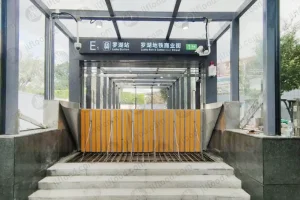
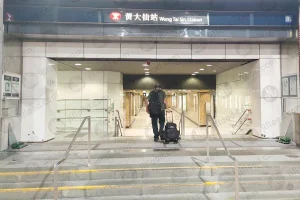
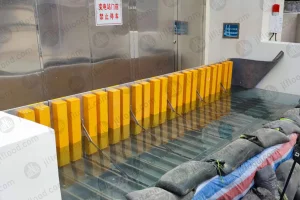
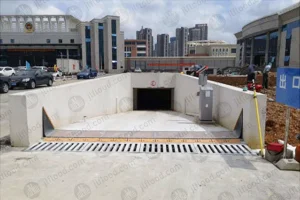
Industrial-grade automatic barriers designed for underground entrances, transit channels, and heavy vehicle driveways.

An authoritative engineering analysis on climate-induced urban flooding, structural vulnerabilities, and the economic shift toward passive, power-free flood mitigation technologies.
Rapid urbanization combined with high-intensity precipitation events (such as atmospheric rivers and tropical cyclones) has exposed severe architectural vulnerabilities in subsurface infrastructure. Traditional flood protection solutions—such as manual stoplogs, demountable aluminum barriers, and motorized flood gates—suffer from systemic failure points during catastrophic events.
Manual aluminum log barriers require advance storm warning, localized storage, transport logistics, and trained personnel to manually slide components into channels under adverse weather conditions. During flash floods, late deployment frequently leads to catastrophic inundation of subway shafts, underground parking ramps, and transformer vaults. Motorized gates, while automated, depend heavily on external AC power grids, auxiliary diesel generators, or vulnerable electronic sensors. When extreme weather destabilizes power grids or causes circuit submergence, electromechanical systems collapse precisely when needed most.
The modern engineering standard for municipal asset protection centers on Hydrodynamic Self-Closing Passive Technology. Pioneered and refined by leading OEM manufacturers such as Nanjing Junli Technology Co., Ltd., these systems exploit Archimedes' principle of buoyancy combined with hydrostatic water head pressure.
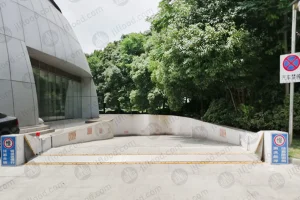
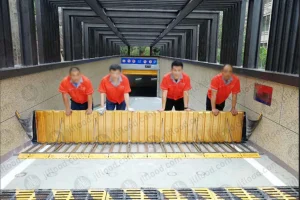
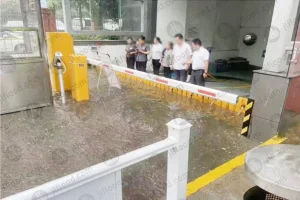
Installed flush with the finished roadway level inside a concrete foundation drive-over chamber, the flood panel remains dormant during normal vehicle and pedestrian traffic. As flash floodwaters spill onto the threshold, water flows into the chamber's inlet basin via gravity. The hydrodynamic buoyant density of the internal panel causes it to self-rise automatically without electrical motors, manual labor, or sensor triggers. As water depth increases, hydraulic head pressure firmly compresses primary EPDM seals against structural frame stops, creating a hermetic seal against flood ingress.
Mathematical modeling, material composition, and structural finite element considerations governing high-durability self-closing flood gates.
The rising force ($F_b$) acting upon the floating leaf panel is determined by fluid density ($\rho$), gravitational acceleration ($g$), and displaced liquid volume ($V$):
F_b = \rho \cdot V \cdot g > W_{panel} + F_{friction}
By utilizing engineered extruded alloy panels containing sealed internal air chambers, the panel's average density is tuned below 0.45 g/cm³. This ensures instant activation at a threshold water height as low as 30–50 mm.
As water rises outside the barrier, hydrostatic pressure ($P = \rho \cdot g \cdot h$) increases proportionally with depth ($h$). This pressure acts directly against the submerged face of the vertical door leaf:
F_{seal} = \int_{0}^{H} (\rho \cdot g \cdot z) \cdot W \, dz
This hydrostatic force drives the primary EPDM multi-vane gasket against the stainless steel jamb frame, achieving near-zero leakage performance (< 0.05 L/hr per linear meter of seal).
When dormant, the top surface of the embedded barrier frame functions as a flush road surface. Built from high-grade structural steel (Q355B / Stainless Steel 304/316) reinforced with internal load ribs:
| Evaluation Parameter | Hydrodynamic Self-Closing (Junli OEM) | Manual Demountable Aluminum Stoplogs | Electromechanical Drop-Down Gates |
|---|---|---|---|
| Power Requirement | 0 kW (100% Passive Hydrodynamic) | 0 kW (Manual Labor) | 2.2 kW – 7.5 kW (Vulnerable Grid) |
| Deployment Speed | Instant (0.1 - 3.0 Seconds) | 30 – 120 Minutes (Requires Team) | 15 – 45 Seconds (Sensor Dependent) |
| Human Reliability Dependency | Zero Human Intervention | 100% Dependent (High Risk) | Partial (Control System Reliant) |
| Blackout Resilience | Complete Immunity | Complete Immunity | Fails Without Generator UPS |
| 20-Year Total Ownership Cost | Extremely Low (Periodic Inspection) | High (Labor Training & Storage) | High (Motor & Battery Servicing) |
| Drive-Over Traffic Bearing | Up to 40 Tons (HS-20 Heavy Traffic) | N/A (Stored Separately) | Limited Wheel Load Ratings |
Engineered barrier variants tailored for specific architectural openings, transit shafts, and utility gates.
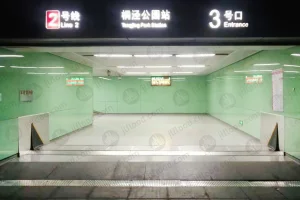
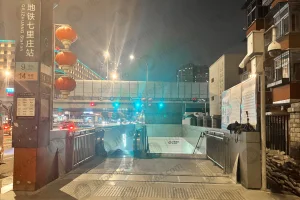
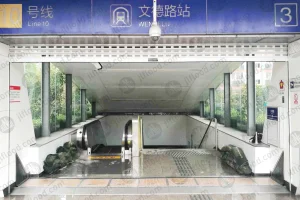
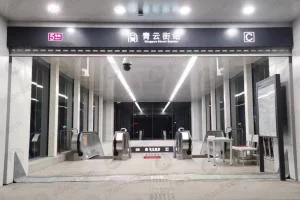
Metropolitan underground rail networks represent high-consequence asset zones where surface flash water ingress can freeze municipal transportation and cause catastrophic financial loss.
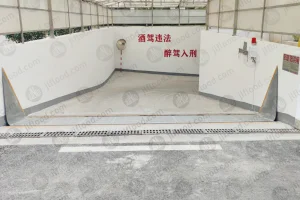
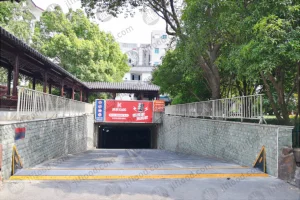
Basement parking structures in shopping complexes, residential towers, and hospitals are natural collection points for urban storm runoff during torrential rainstorms.
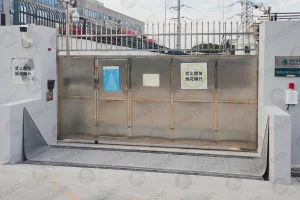
Power grid distribution nodes, transformer rooms, and cable trenches require non-stop operational security. Flooding inside high-voltage environments results in widespread blackouts and explosive grid damage.
Municipal emergency response centers, hospital entrances, airport basements, and subterranean pedestrian crossings demand zero-fail flood barriers.
Full structural lifecycle assistance—from initial BIM/CAD drafting to turnkey global installation and certification.
Junli self-closing flood protection products are engineered in alignment with internationally recognized civil water-tightness and structural standards:
Successful flood barrier performance relies heavily on proper foundation interface engineering. We provide complete technical packages:
We provide comprehensive support for international contractors, engineering consultants, and distributor networks across North America, Europe, Asia-Pacific, and the Middle East:
Advancing flood barrier technology through smart telemetry, nanostructured materials, and predictive maintenance.
Future releases feature embedded energy-harvesting NB-IoT / LoRaWAN wireless telemetry nodes. These self-powered sensors record real-time panel elevation angles, water basin depths, and seal compression pressure, transmitting instant warnings to smart city SCADA command centers during urban inundation events.
Next-generation EPDM-graphene elastomeric seals exhibit enhanced UV resilience, thermal resistance (-40°C to +120°C), and self-healing micro-structural properties. This extends elastomeric sealing service life beyond 25 years while reducing routine maintenance intervals.
Junli is committed to sustainable manufacturing workflows. By utilizing 100% recyclable structural aluminum-magnesium alloys and solar-powered factory fabrication lines, our self-closing barriers help project developers earn LEED v4 and BREEAM sustainability credits for resilient building infrastructure.
In-depth answers to critical technical, operational, installation, and supply chain queries from engineering consultants and procurement officers.
The system operates purely on hydraulic and buoyancy mechanics (Archimedes' principle). The floating panel rests inside a flush recessed ground pit. When surface runoff water flows into the chamber inlet, the engineered light-density internal panel buoyant mass floats upward automatically. As water continues to fill the pit, the door leaf swings up to its design vertical angle (typically 45° to 90°). Hydrostatic pressure from the retained water head then forces the door leaf's perimeter EPDM gasket against the structural frame stops, creating a tight water seal. No sensors, motors, wiring, or human intervention are required.
Standard hydrodynamic single-leaf modules support clear span widths from 1.0 meter to 6.0 meters, with standard water-retaining heights ranging from 500 mm to 2,000 mm. For wide entrances—such as multi-lane underground parking ramps or subway concourses spanning 10 to 30+ meters—we supply modular multi-leaf barrier arrays with interlocking vertical side frames or intermediate removable mullions to ensure structural rigidity and water-tight integrity.
When dormant, the top cover plate of the self-closing barrier forms a flush road surface. The frame structure and top plate are fabricated from heavy-gauge structural steel or high-tensile extruded aluminum alloy reinforced with internal load distribution ribs. Standard units are rated for AASHTO HS-20 / EN 124 D400 vehicle loading, safely supporting heavy trucks, buses, and fire engines up to 40 tons without structural deflection or seal degradation.
Junli self-closing barriers feature integrated sediment-management architecture. The bottom foundation pit is equipped with a self-draining sloping channel connected to the facility's storm drain system. Small amounts of silt flush through gravity drainage outlets. For high-debris urban environments, continuous stainless steel leaf guards cover the inlet grates, preventing large debris from entering. Routine maintenance involves simple hose flushing of the trench during quarterly site inspections.
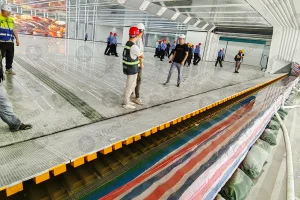
Yes. Every manufactured batch undergoes rigorous full-scale hydrostatic testing in our specialized factory testing pool. We measure lifting trigger speeds, structural panel deflection under maximum design water head, and seal leakage rates. Formal test reports, quality inspection certificates, and live testing video recordings are provided to purchasing clients prior to dispatch.
For embedded models, a concrete trench must be excavated according to our foundation drawings, with rebar tie-ins and bottom drainage lines prepared. The barrier frame is set, leveled, and cast into C35/40 waterproof concrete. For surface-mounted or flip-up models used in retrofit projects where floor trenching is restricted, the frame anchors directly onto a level concrete base slab using chemical anchor bolts and specialized bottom expansion seals.
The structural stainless steel / anodized aluminum frame has a design service life exceeding 20 years. The primary EPDM synthetic rubber seals have an operational life of 10 to 15 years depending on local environmental exposure and can be easily replaced on-site using simple hand tools. Recommended maintenance consists of semi-annual debris clearance, inspection of rubber gaskets, and manual buoyancy check using clean water.
Yes. All Junli hydrodynamic self-closing flood gates include integrated manual maintenance pins and emergency override handles. Maintenance crews can manually lift the panel for seal inspection or lock the panel in a down position during specialized site work or vehicle traffic control operations.
Products are packed in export-grade reinforced wooden crates with internal moisture barriers, edge protectors, and shock-absorbing foam padding. Oversized modular panels exceeding standard 40ft container dimensions are dismantled into engineered sub-assemblies for easy re-assembly on-site. Shipping documents include complete packing lists, CE/ISO certificates, certificates of origin, and installation guides.
To request a tailored engineering proposal and factory-direct pricelist, contact our technical sales team with your opening dimensions (clear width, design retaining height, kerb geometry, and traffic loading requirement). Our engineering department will generate custom AutoCAD/BIM drawings, civil foundation interface details, and a formal commercial quotation within 24 hours.
Explore specialized flood gates for subway connection channels, power substations, and industrial facilities.