Autonomous Hydrodynamic Water-Activated Barriers for Municipal Rail, Power Substations, & Critical Infrastructure Safeguarding
Factory-direct hydrostatic barrier systems engineered for zero-electricity passive deployment across high-risk commercial and municipal underground access points.
As global climate volatility escalates the frequency of extreme precipitation events, civil defense frameworks have transitioned from reactive manual sandbagging to fully automated, zero-electricity passive flood defense architecture.
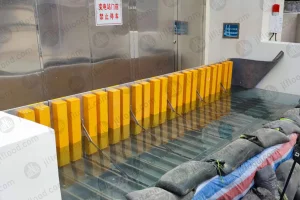
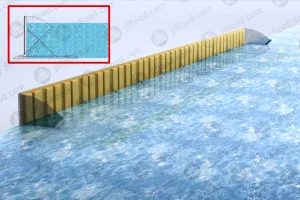
Modern self-deploying floodgates leverage Archimedes' principle and hydrostatic head pressure. Ambient floodwaters enter a subterranean retention trough, automatically generating buoyancy forces that elevate the structural panel into a locked retaining vector without relying on external power grids, IoT signals, or human intervention.
Historically, commercial facilities and municipal transit networks relied heavily on active flood barriers—systems powered by electric motors, pneumatic actuators, or manual labor. However, real-world flood disasters consistently reveal a systemic flaw: intense storm events frequently cause regional power grid collapses and municipal grid blackouts precisely when flood barriers must engage. Furthermore, sudden flash floods leave facility managers with zero lead time to deploy manual demountable post systems.
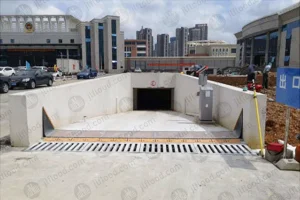
As a premier wholesale self deploying floodgate manufacturer, Nanjing Junli Technology Co., Ltd. addresses these vulnerability vectors through rigorous hydraulic engineering. Our self-deploying gates are completely self-powered, passive mechanical systems. Installed flush with finished road surfaces, they allow unhindered daily vehicular and pedestrian traffic. Upon the ingress of flash floodwaters, the system deploys within seconds, mitigating catastrophic structural inundation.
Engineering Procurement & Construction (EPC) contractors, commercial asset managers, and municipal authorities demand verifiable performance metrics prior to issuing tenders. The table below outlines the core evaluation metrics used by commercial specifiers when procuring hydrodynamic flood control hardware.
| Evaluation Parameter | Traditional Manual / Active Gates | Junli Hydrodynamic Self-Deploying Gates | Engineering Benefit |
|---|---|---|---|
| Power Dependence | Requires AC Power / Backup Generators | 100% Power-Free (Hydrodynamic Buoyancy) | Guaranteed functionality during grid blackouts. |
| Deployment Delay | 30 to 120 minutes (Manual Setup) | Instantaneous / Autonomous (Sub-second) | Eliminates human error & zero lead-time risk. |
| Structural Load Rating | Variable (Often Light Duty) | Heavy Duty (Up to 40-Ton Vehicle Axle Load) | Allows continuous passage of heavy commercial trucks. |
| Sealing Architecture | Single Neoprene Strips | Dual-Matrix EPDM / NBR Compression Seals | Zero-leakage hydrostatic sealing under max head pressure. |
| Life Cycle Cost (LCOE) | High (Routine Electrical/Motor Servicing) | Ultra-Low (Passive Mechanical Components) | Drastically lowers 20-year operational expenditure. |
Customized structural engineering configurations developed for distinct municipal and industrial asset geometries.
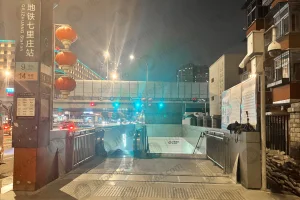
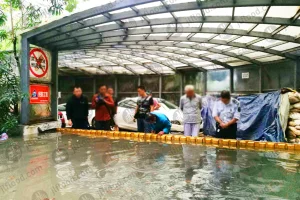
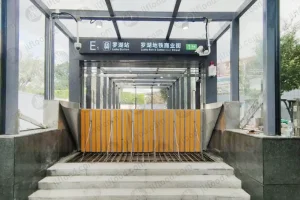
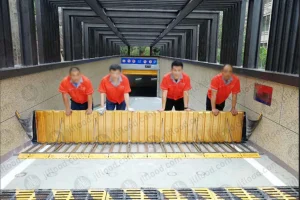
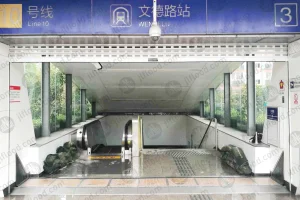
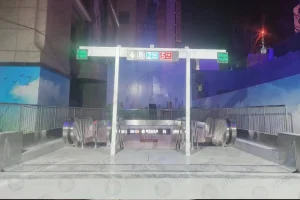
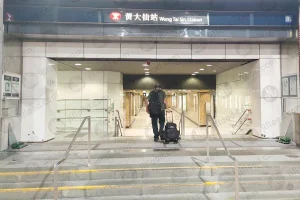
Subway station entrances, pedestrian vent shafts, and underground transit interconnects represent acute vulnerable channels during surface water runoff events. Our embedded self-deploying barriers lie flat within the threshold, ensuring unhindered passenger foot traffic during normal operations while forming an impenetrable water barrier instantly when street levels surge.
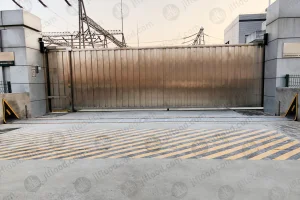
Water infiltration into electrical power distribution transformer yards causes catastrophic equipment short-circuiting and widespread urban outages. Junli perimeter self-deploying floodgates provide automatic isolation for perimeter vehicular gates and cable trench portals without requiring station personnel to be dispatched during hazardous weather conditions.
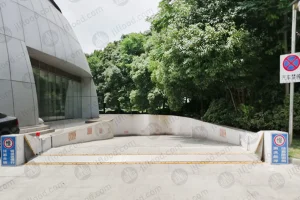
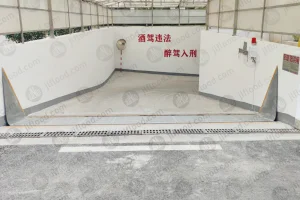
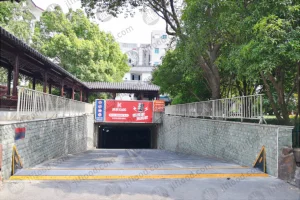
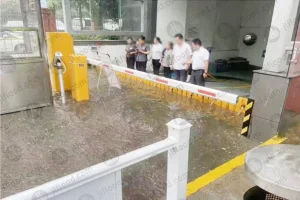
Underground multi-story parking garages in shopping complexes, hospitals, and residential towers face immense hydrostatic liabilities. Our surface-mounted and embedded garage barrier systems support continuous vehicle drive-over traffic up to 40 tons, deploying automatically when stormwater runoff overflows kerb channels.
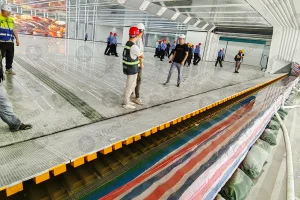
Junli Technology maintains a full-scale hydraulic testing facility in Nanjing, subjecting structural components to rigorous hydrodynamic load simulations, deflection analyses, and seal integrity validations.
Our barrier panels are extruded from high-strength aviation-grade 6063-T6 aluminum alloy or heavy-duty structural steel, treated with fluorocarbon anti-corrosion coatings capable of surviving 3000+ hours of continuous salt-spray testing. Embedded foundation troughs utilize 304 or 316 stainless steel to ensure zero structural degradation in aggressive underground soil conditions.
Water-tightness is maintained through high-resilience EPDM rubber compound profiles engineered with double-lip sealing geometry. Under rising water pressure, hydrostatic pressure naturally compresses the seal interface tighter against the frame, maintaining strict leakage tolerance levels well within international EN 12288 and FEMA standards.
100% mechanical flotation & buoyancy engagement. Zero energy footprint.
Integration of passive activation with IoT status telemetry to central control rooms.
Solar-assisted auxiliary locking mechanisms for high-velocity dynamic surge control.
Exporting high-precision flood control hardware across North America, Europe, Southeast Asia, and the Middle East requires strict adherence to regional engineering norms and civil construction standards.
Nanjing Junli Technology Co., Ltd. provides full engineering documentation packages for international specifiers, including CAD embedded-frame templates, finite element analysis (FEA) structural reports, hydraulic calculation sheets, and comprehensive installation manuals. We collaborate directly with international EPC consultants to supply custom OEM dimensioning based on exact clear opening widths and regional design rainfall intensities.
The barrier panel is installed inside a recessed floor chamber level with the driveway surface. When floodwater reaches the inlet channel, water flows into the chamber. As water fills the basin, natural hydrostatic buoyancy lifts the panel. As the water level rises further, the pressure pushes the panel firmly against vertical support side frames, creating a tight seal. No sensors, motors, or human interventions are required.
Our heavy-duty garage and driveway models are designed for heavy vehicle traffic. Reinforced with internal structural ribbing and manufactured with thick top cover plates, standard units easily handle up to 40-ton axle loads (suitable for heavy fire engines, municipal logistics trucks, and delivery vehicles) without panel deformation.
Junli self-deploying frames incorporate top debris filter grates, internal silt traps, and integrated bottom drainage connection points. Normal rainwater runoff drains freely through the sub-frame outlets. Standard maintenance schedules recommend a semi-annual visual check and high-pressure hose flush of the frame trough to clear accumulated sediment.
Yes. Single-leaf barriers cover spans up to 6 meters. For wider driveways or station plazas exceeding 20 meters, we supply modular inter-locking multi-leaf barrier arrays with removable or auto-rising intermediate support mullions, providing seamless structural continuity across large openings.
Every order is tested in our factory hydro-testing pool before export. We issue certified water-retaining test reports, material mill certificates, seal compression lifecycle data, CAD installation templates, and step-by-step English installation guides for global engineering teams.
Select from our specialized line of metro, substation, embedded, and surface-mount automatic flood control products.