
Deploying heavy-duty hydrodynamic and flip-up automatic protection gates across Cook County residential underground parking, commercial ramps, and municipal assets.
An authoritative whitepaper analysis on why traditional flood defense methods fail in Chicago's urban core and subterranean parking structures.
The Metropolitan Chicago area—spanning the Loop, River North, Fulton Market, and adjacent suburbs in Cook and DuPage Counties—presents a unique hydrological landscape. Flat terrain, coupled with aging combined sewer systems and proximity to Lake Michigan and the Chicago River network, creates intense localized flash flooding risks. High-intensity convective storms during Midwestern summers frequently overwhelm the Tunnel and Reservoir Plan (TARP / "Deep Tunnel"), causing surface stormwater to surcharge through street catch basins.
For commercial real estate managers, multi-family residential towers, and industrial facilities in Chicago, underground garages represent the most vulnerable breach point. A single severe cloudburst can funnel tens of thousands of gallons of stormwater down parking ramps within minutes, submerging electrical switchgear, charging stations, luxury vehicles, and building HVAC systems located in sub-basements.
Unlike coastal mild-climate installations, Chicago flood barriers must endure extreme freeze-thaw cycles (-20°F in winter to 95°F in summer). Vehicles driving over drive-over ramp frames carry heavy loads of road salt, calcium chloride, and slush into foundation troughs. Traditional active mechanical barriers with exposed electromechanical motors, hydraulic oil lines, or electric sensors regularly experience system failure due to freeze-ups, salt corrosion, or power outages during severe summer thunderstorms.
Nanjing Junli Technology’s hydrodynamic power-free automatic flood gates solve these regional challenges. Constructed from high-strength marine-grade extruded aluminum alloys (6063-T6 / 6005A-T6) and sealed with cold-resistant EPDM gaskets, our systems rely entirely on fluid buoyancy and hydrostatic pressure—operating flawlessly even when municipal power grids fail completely during severe urban waterlogging events.
A comparative evaluation of flood control technologies for commercial garage entry ramps and municipal transit openings.
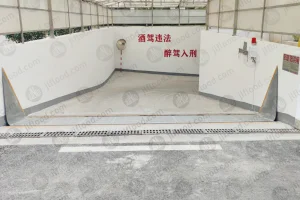
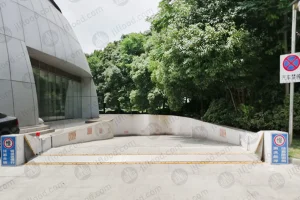
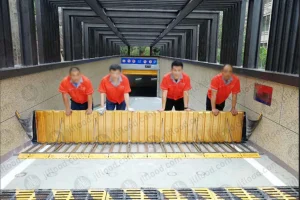
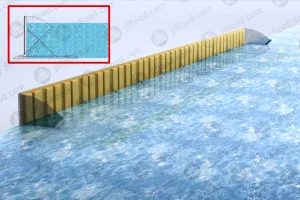
The core panel resides completely flush inside an embedded floor trough. When stormwater flows into the intake chamber, incoming water pressure and natural hydraulic buoyancy lift the door panel automatically. As water rises, hydrostatic pressure pushes the barrier leaf firmly against side sealing posts, locking the system in place without electrical power.
Traditional electric deployment systems require continuous power consumption, monthly battery replacements, complex wiring, and frequent motor overhauls. Hydrodynamic passive systems eliminate standby electricity bills completely, operating as a 24/7 autonomous safeguard that reacts in under 0.1 seconds when water enters the chamber.
Designed for multi-axle commercial delivery trucks, fire engines, and dense passenger vehicle traffic, Junli embedded trough assemblies feature reinforced structural ribbing capable of supporting axle loads up to 30–60 tons (AASHTO HS20 / HS25 compliant options), ensuring zero damage under high daily traffic volume.
| Flood Barrier Technology Standard | Manual Aluminum Stop Logs | Motorized / Hydraulic Electric Barriers | Junli Hydrodynamic Automatic Barrier |
|---|---|---|---|
| Human Operator Requirement | Requires 2–4 staff & 30–60 mins manual setup | Requires push-button or remote activation | 100% Autonomous (Zero Human Required) |
| Power Grid Dependency | None | High (Fails during thunderstorm blackouts) | 100% Power-Free (Hydrodynamic Buoyancy) |
| Flash Flood Response Time | Slow (Risk of personnel arriving too late) | Moderate (1–3 minutes electric lift) | Instantaneous (<0.1 sec hydrodynamic trigger) |
| Winter De-icing & Salt Tolerance | Moderate | Poor (Sensors/motors corrode quickly) | Superior (Marine grade aluminum & EPDM) |
| 20-Year Total Cost of Ownership (TCO) | High (Labor & flood damage risks) | High (Ongoing electrical/motor maintenance) | Lowest (Fit-and-forget passive design) |
Understanding budget estimation, factory wholesale pricing models, and return on investment for commercial real estate developers and municipal specifiers.
When budgeting for subterranean garage flood barrier installations in Chicago, engineering buyers must consider the combined budget of equipment procurement, civil works embedment, freight, and lifetime maintenance. Below is an overview of manufacturer pricing structures for different entry span widths and structural classes:
$1,200 – $2,800 / Linear Meter
$1,800 – $3,500 / Linear Meter
Custom Factory Quote
Tailored flood retention designs matching the structural geometry of Midwestern facilities.
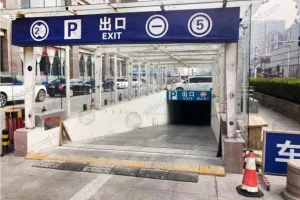
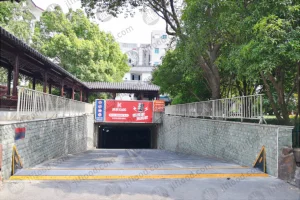
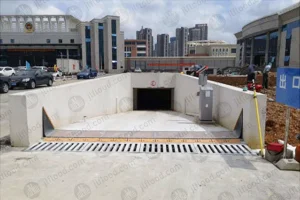
Multi-story subterranean parking garages in dense urban cores feature steep entry ramps directly adjacent to public sidewalk curbs. During heavy urban runoff, surface water cascades down the ramp slope. Installing a surface-mounted or flush-embedded hydrodynamic barrier at the ramp crown creates an impenetrable barrier before water enters sub-levels.
Critical power distribution facilities servicing the Chicago metropolitan grid house transformer vaults below ground level. Junli substation flood doors and auto-rising gates stop floodwaters from short-circuiting regional electrical infrastructure, ensuring continuous utility service during storms.
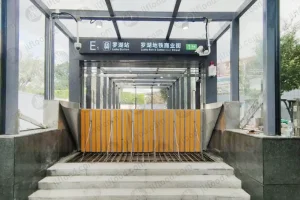
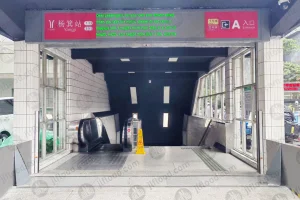
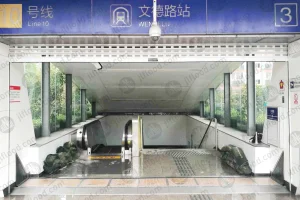
Metro subway portals, commuter rail underpasses, and subterranean pedestrian walkways are vulnerable to flash flooding. Junli flood barriers have been proven across 30+ major metro networks (including Guangzhou, Beijing, Suzhou, and Hong Kong), delivering robust civil defence standards ready for Chicago CTA/Metra transit integration.
Subterranean loading bays and low-elevation industrial distribution centers require ultra-wide span barriers designed to withstand heavy truck axle loads while providing rapid water retention against river basin overflows.
We own in-house design, tooling, robotic welding, and full-scale hydraulic testing pools—delivering verifiable protection that survives audit.
Nanjing Junli Technology Co., Ltd., headquartered in Qinhuai District, Nanjing, Jiangsu Province, is a national high-tech enterprise dedicated to the R&D and manufacturing of intelligent flood control products for civil defense, urban rail transit, power utilities, and commercial buildings.
Unlike trading entities or generic architectural door workshops, our engineering team works across four specialized technology segments: Intelligent Civil Defence, Intelligent Flood Control, Intelligent Bridge Systems, and Intelligent Energy Protection. This multi-disciplinary expertise allows us to solve structural deflection, dynamic hydrodynamic load, seal longevity, and drainage interface challenges that standard manufacturers miss.
The barrier panel panel sits flush inside a recessed foundation chamber. Rising surface water flows into the chamber, generating natural buoyancy and hydrostatic pressure to raise and lock the door into position automatically—with zero electric power, zero sensors, and zero manual labor.
Every barrier model undergoes rigorous full-scale hydrostatic testing in our factory water pool to measure lifting response speed, seal deflection, and zero-leakage performance under design hydrostatic head before dispatching to international project sites.
Integrating IoT telemetry and eco-friendly materials into zero-energy civil defense infrastructure.
Future iterations embed self-powered NB-IoT and LoRaWAN position sensors within passive mechanical hinges. While activation remains 100% power-free, real-time wireless alerts report barrier deployment status directly to Chicago Smart City and building automation management dashboards.
To combat extreme winter road chemical runoff, next-generation gasket seals feature fluorinated polymers that extend elastomeric memory and salt resistance beyond 25 years without hardening or cracking during sub-zero Chicago freezes.
By leveraging aerospace-grade aluminum honeycomb structural cores, door panels reduce weight by 35% while maintaining structural rigidity against 2.0-meter head pressures, allowing even faster passive response to sudden flash flood surges.
Answers to critical questions regarding installation, municipal codes, maintenance, and logistics for Chicago projects.
The barrier panel is housed flush inside a recessed foundation trough at the garage entry. When rising stormwater flows into the trough chamber, natural water buoyancy and hydrostatic pressure lift and lock the panel automatically. Because the system relies entirely on fluid dynamics, it operates with zero electricity, zero motors, zero batteries, and zero human intervention—making it 100% reliable during severe thunderstorm power outages.
Yes. The main structural components are constructed from high-strength marine-grade extruded aluminum alloys (6063-T6) treated with anti-corrosion anodization or fluorocarbon coatings. The sealing system utilizes industrial EPDM rubber engineered to retain flexibility in temperatures down to -40°F (-40°C), resisting chemical degradation from road salt (NaCl) and calcium chloride (CaCl2) brought in by vehicle tires.
Retrofitting an existing garage ramp requires excavating a shallow concrete foundation trench matching the embedment box dimensions, establishing a drain pipe connection to the building’s sump pump or gravity drain line, and setting concrete rebar anchors. Junli provides detailed civil engineering drawings, embedment templates, and step-by-step installation manuals for local Chicago contractors.
Standard hydrodynamic units cover retaining heights from 0.5m (20 in) up to 2.0m (79 in). Single clear spans range up to 6.0 meters, while wide driveways use modular multi-leaf arrangements connected by removable or automatic center posts to cover entry widths exceeding 20 meters.
Yes. Every production run undergoes hydrostatic pool testing in our factory test facility to verify lifting dynamics, zero-leakage seals, and structural deflection under design water head. Detailed test reports, material certificates, and video documentation are attached to each commercial shipment.
Junli passive flood protection systems comply with international floodproofing standards for dry floodproofing of non-residential subterranean structures. Installing engineered passive barriers can lower insurance premiums under commercial property policies and ensure compliance with municipal storm runoff regulations.
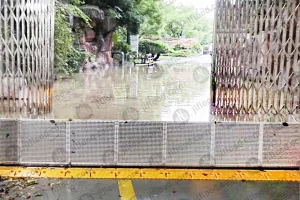
Browse our full series of heavy-duty hydrodynamic gates, metro station barriers, self-closing doors, and surface-mount flood systems available for shipment to Chicago and global destinations.
Access technical specs, application guides, and global service specifications for flood mitigation projects.
Detailed overseas shipping guidance, custom civil embedment drawings, and remote commissioning support for North American architectural firms.
Explore Global Services →Articles on urban hydrology, combined sewer overflow (CSO) risks, dry floodproofing calculations, and gasket maintenance schedules.
Read Technical Insights →Quick index covering hydrodynamic gates, metro portals, substation enclosures, and parking ramp flood defense systems.
Browse Search Index →Send us your garage entryway dimensions, curb elevations, or flood head requirements. Our engineering department will return a complete layout drawing set, hydraulic calculation, and factory-direct price quotation within 24 hours.
Send Inquiry Now

