


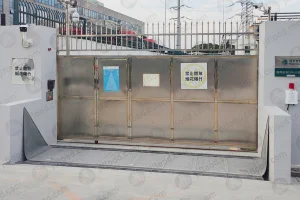
Antwerp Port Substation Flood Control Defence Array
Continuous perimeter hydrodynamic defense barricade designed for multi-megawatt transformer stations.
View Specification →
Rapid-deployment, hydrodynamic and vehicular-rated automatic barriers engineered for high-risk maritime lowlands, tidal Scheldt storm surges, and industrial electrical switchgear enclosures.
Continuous perimeter hydrodynamic defense barricade designed for multi-megawatt transformer stations.
View Specification →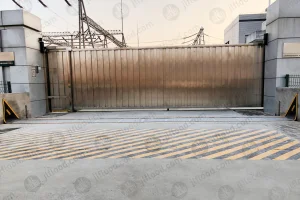
Self-activating buoyancy gate for primary utility access ways, flush-mounted for heavy maintenance transit.
View Specification →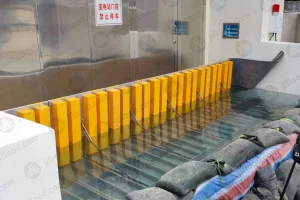
Custom modular 316L stainless steel reinforced boundary system with zero electrical dependency.
View Specification →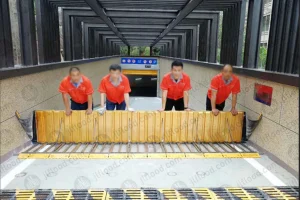
Certified 40-tonne axle loading rating for heavy crane and transformer replacement flatbeds.
View Specification →A rigorous examination of electrical distribution risk profiles spanning the Port of Antwerp-Bruges, Ineos Project ONE corridors, and Elia transmission interconnectors.
The Port of Antwerp-Bruges represents Europe’s largest integrated chemical cluster and the second-largest maritime trading hub on the continent. Spanning both the Right Bank (Rechteroever) and Left Bank (Linkeroever) of the tidal Scheldt River (Westerschelde), this complex relies on an extraordinarily dense high-voltage (380kV, 150kV) and medium-voltage (36kV, 10kV) electrical distribution grid managed by transmission system operator Elia and distribution provider Fluvius.
Because much of the port territory and surrounding polders lie between +4.00m and +6.00m TAW (Tweede Algemene Waterpassing), critical substation basements, cable vaults, and switchgear rooms are permanently exposed to compound flood risks: severe tidal surge depressions moving inward from the North Sea, coinciding with convective flash rainfall and high runoff from the upstream Scheldt basin.
In petrochemical corridors housing multinational majors like BASF Antwerpen, TotalEnergies, Covestro, and Ineos, any unexpected power blackout triggered by water ingress destabilizes cryogenic storage, cracking units, and water treatment plants, generating economic losses measured in tens of millions of euros within hours.
Substation architecture across the Antwerp logistics and refining ecosystem requires specialized physical barrier topologies designed around specific structural and operational constraints:
Standard manual flood stoplogs are obsolete in these settings; maintenance personnel are rarely on site during extreme storm alerts, rendering passive, zero-power automatic actuation an absolute engineering prerequisite.
Why modern utility procurement protocols for Antwerp infrastructure reject electric motors and hydraulic cylinders in favor of fail-safe passive water-buoyancy mechanisms.
Traditional electric gates introduce an engineering paradox: substations submerge precisely when high-voltage networks trip and station backup batteries fail. Junli’s hydrodynamic barrier deploys purely via hydrodynamic lift and water buoyancy within 0.1 seconds of water entry into the embedment basin.
Built for the brackish, sulfur-rich atmosphere of Antwerp Docks. Fabricated from high-tensile 304 or 316L stainless steel and structural 6061-T6 aluminum alloys, electrochemically treated and sealed with fluorocarbon or hot-dip zinc coatings satisfying ISO 12944 C5-M extreme marine life cycles.
In standard dry conditions, the barrier remains completely flush with the roadway surface. The embedment frame withstands 40-tonne axle point loadings, allowing heavy maintenance vehicles, oil tankers, and flatbeds unrestricted operational access into the switchyard.
Procuring specialized flood mitigation equipment for major infrastructure projects in Belgium often encounters severe domestic bottlenecks: extended European fabrication lead times (frequently exceeding 30 to 45 weeks), rigid structural catalogs, and prohibitively high custom engineering markups. Nanjing Junli Technology delivers a powerful alternative rooted in China’s premier industrial supply chain ecosystem:
Every barrier manufactured for export to Western Europe undergoes rigorous pre-shipment hydro-static testing in our proprietary full-scale water retention pool. We simulate instantaneous storm-surge surges, verifying zero-leakage tolerances and mechanical deployment timing under certified conditions.
Our in-house R&D engineering office adapts embedment depth, frame structural reinforcing, kerb gradients, and drainage channel integrations to match Belgian structural engineering specifications and Eurocode 3 standards without excessive NRE (Non-Recurring Engineering) surcharges.
Strategically positioned near major container terminals, we provide direct ocean container shipments (FCL/LCL) arriving directly at the Port of Antwerp terminal hubs (e.g., PSA Antwerp, MPET), drastically reducing intermediate transport handling, risk of transit damage, and customs friction.
Indicative pricing framework for EPC contractors, engineering consultants, and utility asset planners serving Antwerp and Flanders region infrastructure projects. (All values CIF Port of Antwerp).
| Model Series | Application Scenario | Standard Retaining Height | Span Width Per Leaf | Load Capacity | Est. CIF Antwerp Price (EUR)* |
|---|---|---|---|---|---|
| JL-HYD-SUB01 (Modular Hydrodynamic) | Substation Vehicular Perimeter Gate | 600 mm – 1,000 mm | 3.0 m – 6.0 m (Modular to 24m) | HA 40-Tonne Axle | €4,200 – €7,800 / unit |
| JL-HYD-SUB02 (Deep-Surge Heavy) | Dockside Chemical Power Distribution | 1,200 mm – 2,000 mm | 3.0 m – 5.5 m | Heavy Crane / 45-Tonne | €7,500 – €13,200 / unit |
| JL-SRF-MET01 (Surface-Mounted Auto) | Substation Doorway & Cable Vault | 500 mm – 800 mm | 1.2 m – 2.5 m | Pedestrian & Forklift (5T) | €1,850 – €3,400 / unit |
| JL-FLP-GAR01 (Mechanical Flip-Up) | Basement Electrical Equipment Room | 600 mm – 1,200 mm | 1.5 m – 3.5 m | Service Van (3.5T) | €2,400 – €4,900 / unit |
| JL-SLF-0006D (Self-Closing Wall) | Switchyard Outer Perimeter Bund | 800 mm – 1,500 mm | Continuous Array | Hydrostatic Head Only | €1,200 – €2,100 / lin. meter |
*Disclaimer: Final CIF Antwerp landed pricing varies based on exact structural embedment depths, custom alloy selection (AISI 304 vs. 316L), inclusion of remote SCADA position telemetry sensors, and certified witness testing protocols. Comprehensive bid packs and CAD shop drawings are issued within 48 hours of project parameter receipt.
Explore our complete export line of automatic, surface-mounted, and modular flood defense systems utilized by utility operators, mass transit networks, and industrial facilities globally.
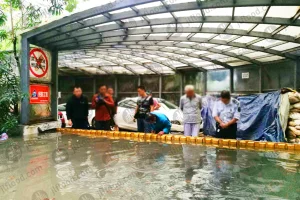
Interlocking segmented barrier assemblies scalable up to 30-meter perimeter entrances without intermediate posts.
View Specification →
Standardized industrial switchyard flood control panel with EPDM marine multi-lip hydraulic compression seals.
View Specification →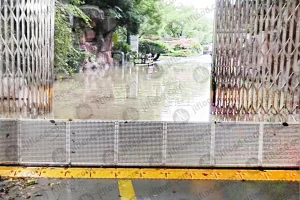
Completely isolated from substation auxiliary AC/DC supply circuits; eliminates common failure modes during power outages.
View Specification →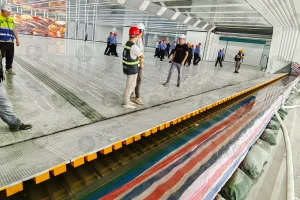
Rises seamlessly with incoming inundation; automatically resets flush once floodwaters drain away through civil sumps.
View Specification →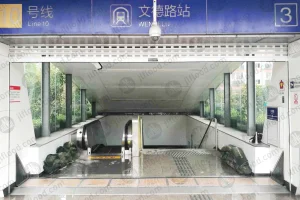
Zero deep excavation required; surface bolted to existing concrete slabs for rapid brownfield facility retrofits.
View Specification →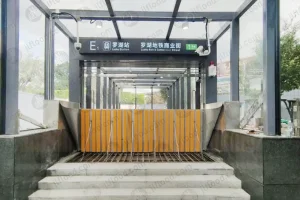
Engineered specifically for rail-transit substation portals, transformer shafts, and intermodal connection tunnels.
View Specification →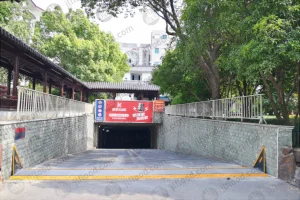
Compact hydraulic/counterbalanced flip-up gate for subterranean oil collection pits and equipment access ramps.
View Specification →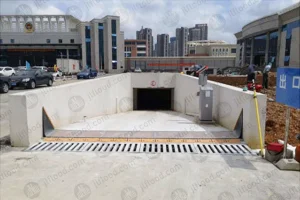
Extreme-depth storm surge containment barrier designed for exposed riverbank and industrial canal boundaries.
View Specification →Specific civil engineering, hydraulic actuation, and European regulatory inquiries addressed by our senior technical staff.
The Flemish Sigmaplan mandates critical defense elevations reaching up to +8.00m to +9.25m TAW to counter historic Scheldt estuary storm tides. Because ground elevations in the Port of Antwerp typically lie between +4.50m and +5.50m TAW, our barriers are engineered with bespoke retaining heights spanning 1,000 mm up to 2,000 mm above finished roadway levels. In combination with surrounding reinforced concrete bunding walls, this provides a certified dry-crest barrier that fully meets or exceeds regional water board flood mitigation benchmarks.
Our hydrodynamic automatic flood barriers are 100% mechanically actuated via water buoyancy and hydrostatic pressure. The system does not utilize electric motors, electronic sensors, pneumatic solenoids, or battery backups. When surface floodwaters enter the pre-installed embedment basin, calibrated buoyancy chambers lift the primary barrier leaf automatically in 0.1 seconds. Even if the entire high-voltage substation and regional power grid are de-energized, the gate deploys and locks into sealing position with zero human intervention.
Substations located near the Scheldt estuary, Zandvliet Lock, or chemical processing clusters face severe environmental corrosivity classified under ISO 12944 as C5-M (Marine) and C5-I (Industrial). Junli manufactures barriers using marine-grade 304 or 316L stainless steel alongside heavy-duty 6061-T6 anodized structural aluminum. All sub-grade embedment frames undergo hot-dip galvanization and electro-chemical passivating coatings, while rubber sealing gaskets utilize dual-durometer UV- and ozone-resistant EPDM, preventing embrittlement caused by chemical fumes or saline exposure.
Yes. The barrier leaf and subterranean foundation box are engineered and structurally modeled in accordance with Eurocode 1 (EN 1991-2) for bridge and roadway traffic loadings. When retracted in the dry state, the upper surface of the barrier sits completely flush with the surrounding concrete apron, eliminating trip hazards and step obstacles. The structural framework easily supports 40-tonne to 45-tonne heavy flatbed trucks hauling replacement high-voltage step-up transformers or heavy mobile servicing cranes.
For fully recessed hydrodynamic models, the contractor prepares a shallow concrete trench with integrated bottom drainage weep holes connected to an adjacent drainage collector or sump pump pit. Junli delivers comprehensive reinforcement positioning drawings, anchor bolt sets, and alignment templates. For brownfield sites where sub-surface excavation is restricted due to dense underground 150kV cable banks, we provide surface-mounted automatic flip-up models that anchor directly onto existing reinforced apron slabs with zero trench excavation required.
Every shipment bound for Antwerp includes a complete European compliance documentation portfolio: EN 10204 3.1 Mill Test Certificates for all alloy plates, structural calculation reports stamped in English, CE declaration of conformity under the Machinery Directive, complete factory witness water testing logs with verified leakage rate data (≤0.2 L/h per linear meter of seal), and exhaustive English maintenance and civil installation step-by-step manuals.
Connect with our technical engineering team today. Provide your clear opening span width, design water head, and site layout drawings to receive a custom flood defense proposal, structural calculation summary, and formal CIF Antwerp landed price quotation within 48 hours.