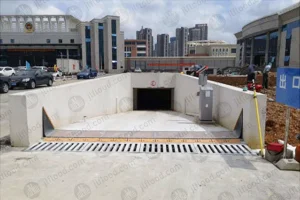
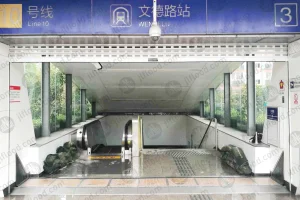
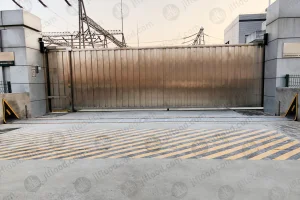
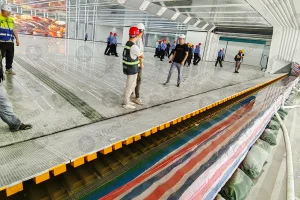
Zero-Power Automatic Buoyancy Flood Gates Engineered for Industrial Garages, Commercial Plazas, Substation Infrastructure & Transit Networks Across Jakarta, Surabaya, Semarang, and Belawan.
Send Inquiry NowField-proven automatic flood barriers designed to protect subterranean assets against severe tropical monsoon inundation and tidal surges without relying on local power grids.
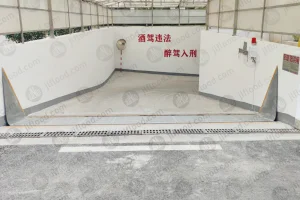
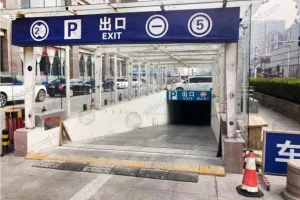
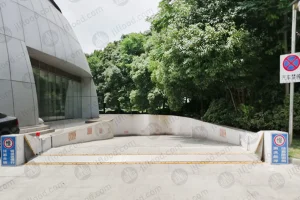
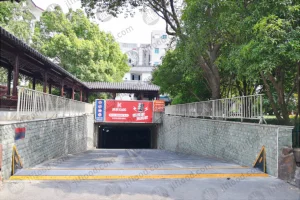
Indonesia’s rapid urbanization across coastal megacities like Greater Jakarta (Jabodetabek), Surabaya, Semarang, and Medan presents a complex hydro-engineering challenge. The convergence of extreme tropical monsoonal precipitation (Musim Hujan), severe land subsidence (exceeding 10 to 20 cm annually in coastal districts like North Jakarta), and intense tidal surges (Banjir Rob) places underground parking structures, commercial basements, and logistics hubs under continuous threat of catastrophic flood events.
Traditional surface runoff drainage infrastructure across Indonesian industrial parks and commercial complexes often suffers from extreme hydraulic overload during peak monsoonal rain events. When stormwater canal capacities are exceeded, flash runoff flows down subterranean parking ramps within minutes. The loss of critical power grids during such storm surges renders electrical pump systems and motorized flood gates completely useless, leading to millions of dollars in vehicle losses, damaged MEP (Mechanical, Electrical, and Plumbing) infrastructure, structural degradation, and massive business interruptions.
North Jakarta, Semarang, and coastal East Java face rapid ground compaction. Basement thresholds drop relative to mean sea levels, increasing waterhead pressures on underground garage entries.
Tropical storms in Indonesia frequently disrupt PLN electrical distribution. Electrically driven barriers and pump systems fail precisely when floodwaters peak.
High spring tides combined with ocean swells breach coastal retaining structures, inundating industrial logistics parks along the Pantura (North Coast Road) corridor.
Technical Insight for Indonesian Procurement Managers: A reliable garage flood barrier must achieve total mechanical independence. Relying on human deployment (manual stoplogs) during sudden tropical downpours leads to severe operational risks, while electrical gates introduce single points of failure during grid outages.
How Nanjing Junli Technology’s passive hydrodynamic automatic flood barriers eliminate human error and electrical dependence.
The Junli Hydrodynamic Automatic Flood Barrier (HM Series) operates purely on the fundamental physics of hydrostatic pressure and Archimedes’ buoyancy principle. Installed flush within the floor threshold of a garage ramp or entryway, the barrier panel remains level with the road surface during normal conditions, supporting heavy vehicular traffic up to 40-ton axle loads.
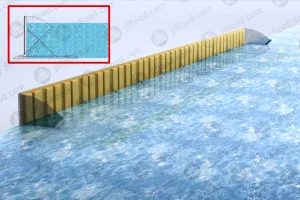
When floodwaters arrive, water naturally flows into the underground basin chamber beneath the barrier door. As the basin fills, water generates upward hydrostatic uplift force ($F_b = \rho \cdot g \cdot V$). This force passively lifts the high-strength aluminum door panel upward. As the water level rises, the panel automatically rotates upward on stainless steel pivot points until it locks firmly into place against the side frames, creating an impenetrable water seal.
| Performance Metric | Junli Hydrodynamic Barrier | Manual Aluminum Stoplogs | Motorized / Hydraulic Gates |
|---|---|---|---|
| Energy Source | Passive Water Buoyancy (0 Electricity) | Manual Labor Required | External AC Grid / Backup Generator |
| Deployment Trigger Time | Immediate (<0.1 sec upon water inflow) | 30 - 120 Minutes (Human Dependent) | 1 - 5 Minutes (If Sensors Function) |
| Power Interruption Risk | Zero Impact (100% Operational) | Zero Impact | High Risk of Failure during PLN Outage |
| Driveway Load Rating | Heavy Vehicle Load (20T - 40T Axle) | No Driveway Load (Must be Installed) | Varies (Requires Surface Pit Covers) |
| Maintenance Cost | Minimal (Periodic Silt Flush & Seal Check) | Storage Management & Seal Degradation | High (Motors, Sensors, Hydraulics, UPS) |
| Ideal Indonesian Setting | Commercial Garages, Substation Entrances | Small Doorways, Pedestrian Paths | Staffed Security Checkpoints |
Deploying infrastructure hardware in tropical marine environments like Indonesia requires rigorous anti-corrosion and structural material selection. The humidity, saline coastal ambient air, and sediment-heavy surface runoff typical of Indonesian cities degrade standard mild steel or inferior rubber seals within months.
Junli flood barriers utilize high-strength marine-grade 6063-T6 architectural aluminum extrusions for the main water-retaining wall, treated with a minimum 15-micron hard-anodized oxidation coating or fluorocarbon (PVDF) spray coating. The embedded foundation frame and bottom water basin are constructed from heavy-gauge Stainless Steel 304 (or SS316 for coastal zones like Tanjung Priok or Belawan), ensuring supreme resistance to soil chemistry, micro-galvanic corrosion, and structural deformation.
Waterproofing integrity is guaranteed by a dual-barrier continuous vulcanized EPDM (Ethylene Propylene Diene Monomer) gasket system. Formulated specifically for high-UV and high-temperature environments (up to 80°C continuous ambient), our EPDM seals exhibit exceptional elastic recovery, low compression set, and extreme resistance to tropical ozone degradation, ensuring zero seal leakage under a continuous 2.0-meter static waterhead.
Installation into existing or new concrete ramps across Indonesian commercial developments is straightforward. Our technical package provides local civil contractors with detailed embedded-frame templates, rebar reinforcement clearance notes, and concrete recess dimensions. The foundation pit features integrated silt-collection gutters and cleanout access covers, allowing simple maintenance flushes during regular building service intervals.
| Technical Parameter | Standard Specification Details |
|---|---|
| Retaining Height ($H$) | Standard: 0.5m, 0.9m, 1.2m, 1.5m, 2.0m (Custom Heights Available) |
| Clear Span Width ($W$) | Single span up to 6.0m; Modular joint arrays for driveways > 20.0m |
| Material Selection | Anodized Aluminum Alloy 6063-T6 / Stainless Steel 304 or 316 Frame |
| Sealing Polymer | High-Density Ozone-Resistant Continuous EPDM Gaskets |
| Leakage Rate | Class 5 Hydrostatic Test Verified (< 0.05 L/hr per meter frame) |
| Surface Finish | Anti-Slip Diamond Pattern Tread Surface / Optional Aesthetic Coatings |
| Compliance Standards | Compliant with SNI (Standar Nasional Indonesia) Civil Structural Directives |
Streamlined logistics, customs clearance, and engineering design support for Indonesian developers, EPC contractors, and government tenders.
Nanjing Junli Technology Co., Ltd. operates as a direct manufacturer, eliminating middleman trading costs and offering Indonesian procurement officers direct access to wholesale factory pricing, customized structural engineering, and full technical submittal packages.
Our engineering team generates site-specific AutoCAD, Revit BIM models, and civil connection details within 48 hours to support your consultant approval processes.
Every ordered flood barrier leaf undergoes 100% full-scale water retention testing in our hydraulic test pool prior to export. Video verification reports are issued with shipping manifests.
Seamless export logistics support serving Tanjung Priok (Jakarta), Tanjung Perak (Surabaya), Belawan (Medan), and Makassar, complete with Form E ACFTA preferential tariff documentation.
Technical clarity regarding installation, maintenance, logistics, and compliance in Indonesia.
The Junli HM series hydrodynamic flood barrier operates entirely on passive water buoyancy and hydrostatic pressure. It requires zero electrical power, zero control wiring, zero sensors, and zero manual human activation. When floodwater enters the recessed bottom chamber, the rising water level mechanically floats the door panel upward, locking it into the flood protection position. It provides 100% reliable defense even during total regional grid blackouts.
Yes. Our garage flood barrier doors are constructed using heavy-duty 6063-T6 aluminum structural extrusions reinforced with internally ribbed load-bearing supports. Standard units support axle weights up to 20 tons, with custom heavy-duty variants rated for 40-ton container trucks and fire appliances entering commercial logistics hubs.
The foundation basin is engineered with self-flushing sloping drainage channels and removable silt-trap filter screens. Regular tropical rainfall automatically rinses minor debris out through the connected drainage pit. In addition, routine quarterly maintenance involves opening the top cover plates and rinsing accumulated sediment using a standard high-pressure water washer.
Standard manufacturing lead time is 15 to 20 days upon drawing approval. Ocean freight shipping from Ningbo/Shanghai port to Tanjung Priok (Jakarta) or Tanjung Perak (Surabaya) typically takes 7 to 10 days. We provide complete Form E (ASEAN-China Free Trade Area) documentation to ensure preferential zero or reduced import tariff treatment for Indonesian importers.
For embedded models, the contractor must construct a shallow concrete trench across the ramp threshold according to our provided layout drawing, embed our supplied anchor frames, connect a PVC drainage pipe from the pit bottom to the building sump, and pour high-strength non-shrink grout. Surface-mounted retrofit options are also available for existing built structures requiring minimal trench excavation.
Explore specialized automatic barriers engineered for metro networks, power substations, commercial garages, and public infrastructure across Indonesia.