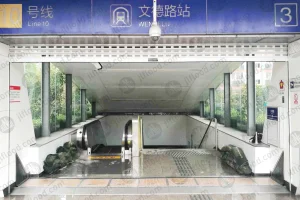
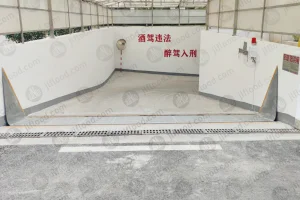
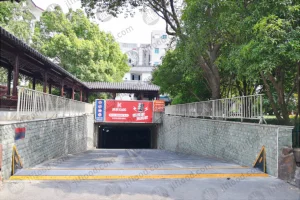
Direct factory-supplied, power-free automatic flood retention gates engineered to protect critical electrical assets against tropical flash inundation and urban waterlogging.
An in-depth analysis of flood protection requirements for 110kV, 220kV, and 500kV electrical substations operating within the tropical monsoon climate of the Red River Delta.
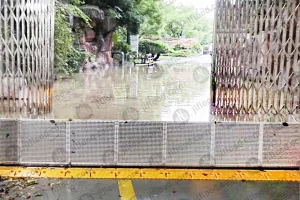
Hanoi, located in the lower reaches of the Red River Basin, experiences severe vulnerability to compound flood events caused by intense Southeast Asian monsoon downpours, typhoon storm surges, and riverine overtopping. Districts such as Ha Dong, Cau Giay, Long Bien, and Hoang Mai present high urbanization density where surface run-off routinely exceeds municipal drainage discharge rates of 50-70 mm/hr. During peak weather anomalies (such as Typhoon Yagi and tropical low-pressure belts), rainfall intensity can exceed 180 mm within 3 hours, causing localized water pooling upwards of 1.2 meters above roadway kerbs.
For high-voltage utility infrastructure managed by EVN HANOI (Electric Power Corporation of Hanoi), flooding represents an existential operational risk. Substation assets—including 110kV/220kV Gas-Insulated Switchgear (GIS) halls, power transformer yards, control cable trenches, and low-voltage distribution rooms—are structurally sensitive to liquid ingress. Submersion of cable trenches creates short-circuit catastrophic cascade failures, equipment destruction, multi-million dollar repair costs, and regional economic disruption.
Technical Reality for Hanoi Substation Engineers: Grid failure during monsoon floods almost universally coincides with total power blackouts. Therefore, motorized flood barriers relying on active AC power or manual stop-log barriers requiring emergency physical deployment fail precisely when water levels rise fastest at 2:00 AM without warning.
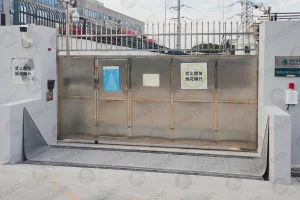
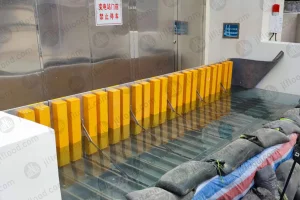
To establish absolute operational resilience, infrastructure projects in Vietnam are pivoting toward Hydrodynamic Self-Rising Automatic Flood Barriers. Engineered by specialized OEMs such as Nanjing Junli Technology Co., Ltd., these systems function on fundamental fluid mechanics—specifically Archimedes' principle of buoyancy combined with hydrostatic head differential pressure.
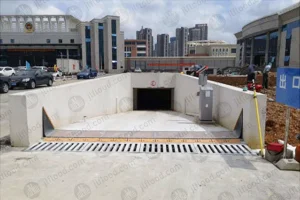
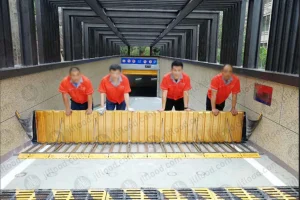
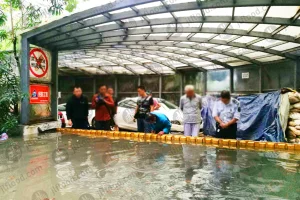
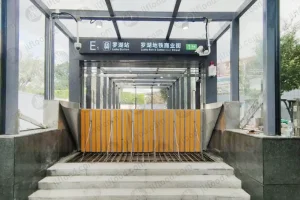
When surface water cascades toward a protected substation gateway, it drains into a stainless-steel foundation pit flush-recessed into the entrance drive. As water enters the internal chamber, integrated high-density buoyant composite panels generate upward lift. The barrier automatically rotates upward along a structural pivot axis, deploying to full design retaining height without human intervention, electricity, software signals, or hydraulic pumps.
Zero electrical wiring, zero battery maintenance, zero sensory delay. Driven purely by rising flood water buoyancy.
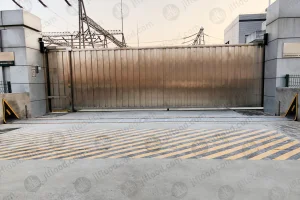
Reinforced structural frame handles 20 to 60-ton heavy machinery transport vehicles entering substation yards daily.
Self-cleaning bottom chamber geometry prevents tropical river mud, sand, and plant debris from jamming the pivot hinge.
Direct technical side-by-side comparison for procurement officers, EPC contractors, and electrical design institutes in South East Asia.
| Performance Parameter | Junli Hydrodynamic Automatic Gate | Traditional Aluminum Stop-Logs | Electric Motorized Flip-Up Gate |
|---|---|---|---|
| Power Dependence | Zero (Passive Water Buoyancy) | Zero (Manual Assembly) | High (Requires AC / Backup Gen) |
| Activation Response Time | Immediate (< 0.5s liquid level) | 30-120 minutes (Labor required) | 5-10 minutes (Sensor delay) |
| Human Labor Requirement | 0 Persons (Unmanned 24/7) | 2 to 6 Field Technicians | 0 Persons (If electrical system holds) |
| Substation Vehicle Drive-Over | Flush Embedded (No impact) | Requires structural remove/re-install | Bumping ramp surface |
| Corrosion Resistance Rating | 304/316 Stainless Steel + EPDM | Anodized Aluminum | Carbon Steel frame (Paints peel) |
| Service Lifespan | 25+ Years | 5-10 Years (Seal degradation) | 8-12 Years (Motor failure) |
Our hydrodynamic automatic substation barriers are custom-configured to solve high-frequency failure points found in Vietnamese energy infrastructure:
Leveraging Nanjing Junli Technology’s state-of-the-art manufacturing campus to deliver high-capacity flood defence infrastructure directly to Vietnamese project sites within aggressive timelines.
Heavy CNC laser cutting of structural 304/316 stainless steel ensures sub-millimeter sealing gap precision across multi-leaf installations.
Every custom batch undergoes hydrostatic head pressure testing, leakage rate certification, and load deflection testing before export shipping packaging.
Optimized freight corridors via Pingxiang/Lang Son border gates or Haiphong Port, enabling 5 to 7-day fast transit to Hanoi job sites.
As the primary hub for global infrastructure metal matrix fabrication, China’s industrial ecosystem provides unmatched economies of scale, metallurgy quality control, and rapid custom design turnarounds. Nanjing Junli Technology Co., Ltd. integrates full-chain design: from hydraulic buoyancy calculations, structural finite element analysis (FEA), to EPDM vulcanized sealing compound formulation.
Compared to European or North American flood gate suppliers whose lead times often exceed 16 to 24 weeks at prohibitive costs, Junli delivers fully certified, enterprise-grade automatic flood barriers to Vietnam in a fraction of the time and at a cost structure that maximizes project engineering budgets.
Detailed technical answers to common design, civil installation, and compliance questions from Hanoi EPCs and substation managers.
A: The barrier utilizes a multi-stage seal matrix. The bottom hinge incorporates a continuous vulcanized EPDM rubber seal that compresses under the hydrostatic weight of the impounded floodwater. Side frames utilize EPDM lip seals reinforced by side water pressure—meaning the higher the flood head rises, the tighter the lateral seals press against the frame, maintaining strict IP68 watertight integrity.
A: Yes. The bottom foundation frame is engineered with heavy structural steel channels and internal load-bearing ribs designed to withstand wheel loads up to 40–60 tons (compliant with international highway and heavy substation transformer transport specifications). When no floodwater is present, the barrier panel rests completely flat inside the frame trench, perfectly level with the concrete driveway.
A: The local contractor must excavate a shallow foundation trench across the entrance span based on our provided embedded template drawings, pour a reinforced concrete base, and provide a drainage connection outlet at the bottom of the pit (to clear rainwater during normal dry periods). Our team supplies full CAD construction civil interface drawings, rebar arrangement notes, and step-by-step English/Vietnamese installation manuals.
A: The foundation pit is designed with an angled self-flushing bottom tray and debris-settling trough. Routine maintenance simply requires periodically lifting the top cover plates during annual maintenance schedules to clear collected sediment. The mechanical pivot hinges are encased in maintenance-free PTFE/stainless steel sleeves that resist abrasive silt and organic corrosion.
A: Absolutely. We welcome third-party inspection agencies (such as SGS, Bureau Veritas, or EVN technical representatives) to witness hydrostatic basin seal tests at our Nanjing manufacturing facility. Live video stream testing and official sealed inspection certificates are standard procedures for export orders.
Explore our comprehensive array of hydrodynamic, modular, flip-up, and metro-certified flood control solutions available for direct wholesale supply in South East Asia.
Partner directly with China's leading hydrodynamic flood barrier manufacturer. Get site-specific engineering consultation, customized pricing lists, CAD drawings, and export support tailored for the Hanoi & Vietnam power sector.